If you are looking for a World War II Morse code machine, these products are modern learning and practice kits, not documented WWII-era equipment or historical replicas. The pre-soldered trainer is best for display-based practice without soldering; the EIELE kit suits buyers who want a soldering project; and the Sabary key is better for audible tapping practice. The telegraph kits offer a hands-on introduction to sending code. Compare their features below and choose based on whether you want to learn, build, or practice.
| Product | Best For | Key Feature |
|---|---|---|
| Morse Code Trainer DIY Kit | Screen-based practice without soldering | Pre-soldered board and LCD |
| Sabary Morse Code Trainer | Audible key practice | Buzzer and voice prompts |
| EIELE Decoder Soldering Kit | Electronics learners | Requires soldering; LCD feedback |
| Telegraph Machine Electric Circuit Kit | Learning through a build project | Materials and tools included |
| Learn Morse Code Telegraph Machine | Basic circuit experiment | Universal compatibility listed |
Morse Code Trainer DIY Kit
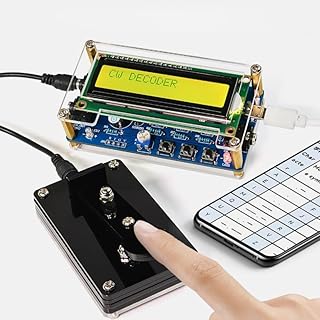
Best for: Beginners and hobbyists who want a build-oriented trainer but do not want to solder. Its PCBA is pre-soldered, and the product includes an enclosure and CW key. The brightness-adjustable LCD displays up to 16 characters, giving learners visible feedback while entering or decoding code.
This is the strongest choice for screen-based practice among the listed products. It combines a physical key with an on-screen result, which can help users connect tapping with the characters displayed. The protective case keeps the controls and screen accessible while enclosing the board.
Limitation: The kit is not described as a WWII replica, and its features should not be taken as evidence of period authenticity. Choose another option if the main goal is a soldering exercise.
Sabary Morse Code Trainer
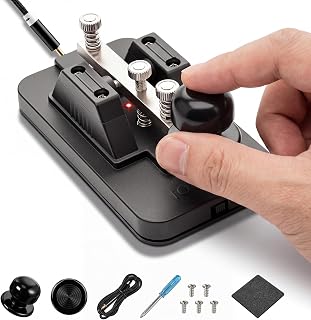
Best for: Learners who want to hear a beep while tapping a Morse key. The buzzer provides audible feedback, and the listing also mentions voice prompts. The kit includes a telegraph key, cable, two buttons, screwdriver, screws, and an anti-slip pad.
The product is positioned for CW practice, ham radio learning, and teaching. Its included cable is described as connecting to radio transmitters, making it a better fit for buyers interested in a key-based practice setup than for someone seeking an LCD decoder. The listing says it is compatible with most CW transceivers, but buyers should check their equipment’s connection requirements.
Limitation: It requires two AAA batteries, which are not included. The supplied information does not establish that it reproduces a WWII communications device.
EIELE Morse Code Decoder Kit

Best for: Students and DIY electronics enthusiasts who want soldering practice alongside Morse code learning. Unlike the pre-soldered trainer, this kit explicitly requires soldering. Its finished decoder has a brightness-adjustable LCD that can show up to 16 characters.
The hands-on assembly makes this a suitable classroom or course project for learning soldering and exploring a Morse code decoder. The display provides visible feedback during practice and decoding tasks. Choose this kit if building the electronics is part of the intended activity, rather than simply operating a ready-to-use trainer.
Limitation: Soldering is required, so it is not the better choice for someone seeking a no-solder setup. The listing describes an educational kit, not a historical WWII machine.
Telegraph Machine Circuit Kit

Best for: Families, students, or educators looking for a telegraph-themed construction activity. The listing describes an all-inclusive kit with materials and tools for the project, designed to make learning through building more engaging. Its example activity involves sending a message to friends in Morse code.
Compared with the LCD decoder kits, this option is presented as an electric circuit experiment and project rather than a character-display trainer. It may suit a buyer who wants a practical introduction to the idea of a telegraph and sending messages through a build-and-play activity.
Limitation: The provided product details do not specify an LCD, voice prompts, soldering requirements, or a connection to radio equipment. Do not assume it is a replica or period-correct device.
Learn Morse Code Telegraph Machine

Best for: Buyers comparing simple telegraph-themed circuit experiments. The listing identifies it as a Morse code telegraph machine and electric circuit experiment, and gives “Universal” for compatible brand and model. That information is limited, so this option is best considered when the basic experiment concept matches your needs.
It is a less detailed listing than the other kits. It does not provide specific information about a display, buzzer, included parts, assembly steps, or whether soldering is required. Review the product details before buying if those features matter to your project.
Limitation: The supplied feature information is sparse and does not establish historical accuracy or explain exactly what the finished machine does.
Buying Guide: Choosing A Morse Code Machine
Do you want a historical replica or a learning tool?
These five listings describe modern trainers, decoders, or educational circuit kits. None is identified in the supplied information as authentic WWII equipment or a historically accurate replica. For a history display, verify period, manufacturer, model, and provenance separately rather than relying on the words “telegraph” or “Morse code” in a product name.
Should you choose an LCD trainer or an audible key?
Choose an LCD model if you want visible character feedback: the DIY trainer and EIELE kit both list a display for up to 16 characters. Choose the Sabary key if audible beeps and tapping practice are more important. The telegraph circuit kits are better suited to a construction activity, based on their descriptions.
Do you want to solder or avoid soldering?
The first trainer uses a pre-soldered board and is described as requiring no soldering. The EIELE kit explicitly requires soldering. The other listings do not provide enough detail to confirm their soldering requirements, so check the full product information before choosing.
What should you verify before purchase?
- Confirm what components, cables, and tools are included.
- Check power requirements; the Sabary trainer requires two AAA batteries, not included.
- For radio use, verify the key and cable connection against your equipment.
- For classroom use, compare assembly difficulty and whether a display or audible feedback is needed.
Frequently Asked Questions
Are these machines actual World War II Morse code equipment?
No. The supplied descriptions identify modern practice, decoding, or educational kits, not authentic WWII-era machines.
Which listed product has an LCD display?
The pre-soldered Morse Code Trainer and the EIELE decoder kit both list brightness-adjustable LCDs that can show up to 16 characters.
Which product requires soldering?
The EIELE Morse Code Decoder kit explicitly requires soldering. The first trainer has a pre-soldered PCBA and is described as not requiring soldering.
Which option includes audible feedback?
The Sabary Morse Code Trainer lists a buzzer that produces beeps during tapping and also mentions voice prompts.
Do any of these products include batteries?
The Sabary listing says it requires two AAA batteries and that batteries are not included. Battery details are not provided for the other products.