The best choice depends on where you need the signal to go: a mixer or PA with an XLR input, a camera, or a speaker with a 1/4-inch input. The Devilclaw is the clearest fit for wireless use with XLR microphones and switchable phantom power; the Pyle system is a compact belt-pack option that lists XLR. Shure is suited to buyers seeking a complete professional lavalier setup, while Phenyx Pro and TONOR offer portable bodypack systems with 1/4-inch receiver outputs. Check connector requirements before buying.
| Product | Best for | Connection details in listed features |
|---|---|---|
| Devilclaw 48V Phantom Power Wireless XLR System | Wireless XLR microphones and instruments | Switchable 0V, 5V, and 48V modes |
| Pyle PDWM1988B | Compact belt-pack PA setup | Product name lists XLR |
| Shure BLX14/CVL | Complete lavalier system | Receiver output type not specified in supplied features |
| Phenyx Pro PDP-1-1B | Portable live use | 1/4-inch receiver output; 3-pin mini XLR mic connection |
| TONOR UHF bodypack system | Presentations and events | 1/4-inch receiver output |
Devilclaw Wireless XLR System

Best for: Buyers who want wireless operation with compatible XLR microphones, including dynamic and condenser models. The system offers selectable 0V, 5V, and 48V modes, plus a lavalier microphone and an instrument pickup. Its 16 adjustable UHF channels and stated 160–260-foot range provide options for stage use.
This is the strongest match for an XLR-centered search because the listed features specifically describe a wireless XLR system and phantom-power selection. It may also suit performers who want to switch between voice and instrument pickup.
Limitation: The listed operating band is 570–590 MHz, so check local frequency rules and the needs of your equipment before choosing it.
Pyle PDWM1988B Compact UHF System

Best for: Users seeking a small desktop receiver and a belt-pack transmitter for a home or PA setup. The package includes headset and lavalier microphones, a selectable-frequency design, dual antennas, and a receiver with an LCD display. The transmitter uses two AA batteries, while the receiver is USB-powered.
The product name identifies XLR, making it worth considering when that connector is part of the setup. Its belt-pack format lets the speaker wear the transmitter rather than hold a microphone.
Limitation: The supplied features do not explain the precise XLR connector configuration or provide a range figure. Confirm the connection details for your equipment before purchase.
Shure BLX14/CVL Lavalier System
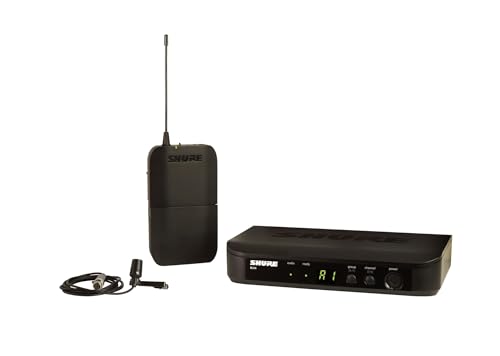
Best for: Speakers who want a complete, single-channel wireless lavalier package. It includes a BLX4 receiver, BLX1 bodypack transmitter, and CVL cardioid lavalier microphone with clip and windscreen. The listed line-of-sight range is up to approximately 300 feet, and the bodypack can run for up to 14 hours on two AA batteries under typical conditions.
Choose this if an included lavalier mic and bodypack matter more than a bare wireless adapter. Its UHF H10 band is specified as 542–572 MHz, which helps buyers check frequency suitability for their location.
Limitation: The supplied features do not specify the receiver’s output connector. Verify whether it matches your mixer or XLR input arrangement, and check local frequency authorization.
Phenyx Pro PDP-1-1B Digital System

Best for: Live performers who want a compact rechargeable receiver and a bodypack that can be used with a headset or lapel microphone. The system has 15 tunable UHF frequencies in the 902–928 MHz band, USB-C charging, and a stated 160–200-foot line-of-sight range. Its receiver connects through a 1/4-inch TS connector.
The bodypack’s 3-pin mini XLR jack is a microphone connection, not the same as an XLR output from the receiver. This distinction makes the system useful for some lavalier setups but important to check when connecting to a mixer.
Limitation: The receiver output is 1/4-inch, so an XLR-input-only device may require a suitable connection solution.
TONOR UHF Lavalier And Headset System

Best for: Presenters, event speakers, and users who want both a lavalier and headset microphone in one package. The system lists a 200-foot line-of-sight range, 15 channels, automatic pairing, and bodypack controls that include an LCD display, volume controls, and an ON/MUTE/OFF switch.
The receiver connects to a 1/4-inch microphone input on compatible sound equipment. Choose it if that input suits your speaker, mixer, or amplifier and you want hands-free microphone choices.
Limitation: The listed receiver connection is 1/4-inch, not XLR, and the product does not support Bluetooth or direct connection to soundbars and TVs.
Buying Guide: What Should You Check?
Do you need XLR at the microphone or receiver?
Connector descriptions can refer to different points in the signal chain. A bodypack may accept a microphone through a mini XLR jack while the receiver sends audio out through 1/4-inch. If your mixer requires XLR, confirm the receiver’s output connection rather than relying on the word “XLR” in a product title.
Will you connect a condenser microphone?
Condenser microphones may require phantom power. The Devilclaw listing specifies selectable 0V, 5V, and 48V modes. Match the selected voltage to the microphone’s requirements, and do not assume that other wireless lavalier systems supply phantom power.
How much wireless range do you need?
Compare stated line-of-sight figures, not just the largest number. Walls, obstacles, and the setup environment can affect a wireless link. The listed options range from about 160 feet for the Phenyx Pro to approximately 300 feet for the Shure system, under the conditions described by their product information.
How many microphones and channels are required?
For one speaker, a single-bodypack system may be enough. Check the number of transmitters and microphones included, as well as channel-selection features. The Phenyx Pro lists 15 tunable frequencies; channel count alone does not establish that a system will work in every location.
Frequently Asked Questions
Can a wireless lavalier microphone connect to an XLR mixer?
Yes, if the receiver provides an XLR output or a compatible connection is available. Confirm the receiver output specifically; an XLR microphone input on a bodypack does not mean the receiver has an XLR output.
Is a 3-pin mini XLR the same as standard XLR?
No. The Phenyx Pro features describe a 3-pin mini XLR jack on its bodypack. Check connector size and purpose before matching it with standard XLR equipment.
Do these wireless systems use Bluetooth?
The TONOR listing explicitly says it does not support Bluetooth. The products described here use wireless microphone transmission rather than being identified as Bluetooth microphone systems.
Should I check wireless frequency regulations?
Yes. Frequency permissions vary by location and band. The Shure listing specifically advises buyers to verify local compliance for its H10 band; check applicable rules for any UHF system before use.