With a growing need for fast, accurate inventory and access control, UHF long-range RFID readers are an essential tool for warehouses, parking facilities, and secure buildings. This article highlights five high-performing options designed for outdoor use, IP67 protection, or robust indoor environments. Each entry includes a quick glance at capabilities and connectivity to help you compare at a glance.
| Product | Brand | Typical Range | Interfaces | Notes |
|---|---|---|---|---|
| YANZEO SR681 UHF Reader | Yanzeo | Up to 6m | USB, RS485, Wiegand26/34 | IP67 outdoor-ready with 8dBi antenna |
| Geenfc E Series UR-E901 | GEENFC | Typically 10m | RJ45, RS232, RS485, WG, TTL | 9dBi circular antenna |
| INPAITOO UHF Mid-Range | INPAITOO | Up to 6–8m | RS232, RS485, Wiegand | 8dBi antenna; compact and portable |
| YANZEO SR682 UHF Reader | Yanzeo | Long-range options | USB, RS485, Wiegand26/34 | IP67, network output |
| YANZEO SR791 UHF Reader | Yanzeo | 3–15m | USB, RS485, Wiegand26/34 | 10dBi antenna; remote-access oriented |
YANZEO SR681 UHF Reader With 6m Range

The SR681 provides a robust 6-meter long-range capability with an 8 dBi antenna, designed for outdoor installations. It supports USB and RS485 connections as well as Wiegand26/34 outputs, making it flexible for access control and inventory tasks. A professional technical support team is included through Yanzeo, and SDK resources are available for integration. This model emphasizes reliable performance in variable conditions with Wiegand output compatibility for secure entry systems.
GEENFC UR-E901 9dBi Long-Range UHF Reader

The UR-E901 model features a built-in circular 9 dBi antenna and broad compatibility with RJ45, RS232, RS485, WG, and TTL interfaces. Operating in the 902–928 MHz band, it delivers strong read performance with an inventory speed of up to 100 tags per second. Its high integration and multiple connectivity options suit industrial environments needing dependable tag reads across longer distances.
INPAITOO UHF Mid-Range Reader
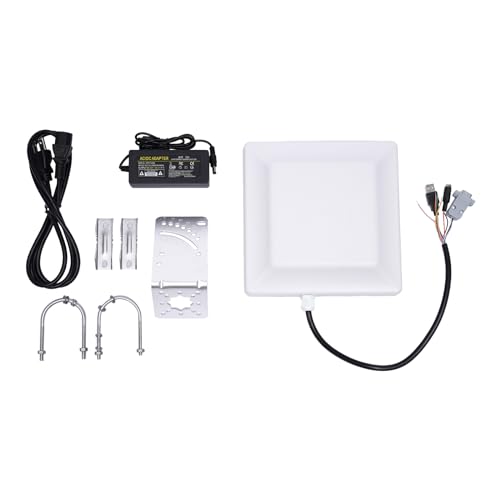
This mid-range reader emphasizes power efficiency and high RF output, with up to 30 dBm output and an 8 dBi antenna. It supports RS232, RS485, and Wiegand interfaces, ensuring broad compatibility with access control or automated systems. The compact dimensions and lightweight design (about 2.3 kg) enhance portability for on-the-move deployments, such as gate barriers or remote facilities, while maintaining reliable reads in the 6–8 meter range.
YANZEO SR682 UHF RFID Reader

The SR682 combines a long-range capability with network-ready USB/RS485 outputs and Wiegand26/34 interfaces. It supports ISO18000-6C/EPC Gen2 and ISO18000-6B, allowing broad compatibility with many tag standards. A wide working frequency band of 860–960 MHz enables robust performance in varying RF environments while sustaining reliable reads for access control and inventory management on a larger property footprint.
YANZEO SR791 UHF Reader With 10dBi Antenna

The SR791 offers a longer reading distance, up to 3–15 meters, with a 10 dBi antenna and USB RS485 Wiegand26/34 interfaces. Built for remote access control and parking systems, it commingles rugged IP67 protection with network output, enabling centralized management across multiple entry points. The model is designed to deliver stable performance in diverse environments while supporting scalable deployments.
Geenfc E Series 9dBi Long-Range UHF Reader

The Geenfc E Series E units provide a 9 dBi directional antenna with 902–928 MHz operation and the typical 8-meter read distance. Interfaces include RJ45, RS232, RS485, WG, and TTL, making the reader suitable for inventory or gate control setups. The ISO18000-6C/EPC Gen2 compatibility enables seamless integration with common RFID infrastructure and software ecosystems.
Buying Guide
Key purchase considerations help align reader choice with your application needs. First, define the required read range and environment. Outdoor deployments demand IP-rated housings (IP67 or higher) and corrosion resistance, while indoor uses favor compact form factors and power efficiency.
Second, assess connectivity and integration. USB, RS485, RS232, and Wiegand outputs cover most access control and inventory systems. Ensure the chosen model supports ISO18000-6C/EPC Gen2 and any vendor-specific SDKs you rely on.
Third, consider antenna gain and physical footprint. Higher dBi antennas extend range but may increase size and placement complexity. A compact reader with an 8–10 dBi antenna often balances range and installation flexibility.
Fourth, examine firmware support and developer resources. A dedicated support team and accessible SDK facilitate smoother integration and ongoing maintenance.
Fifth, evaluate power and mounting. Some models operate on standard +9V or other supplies and vary in your ability to deploy on gates, walls, or poles. Power efficiency matters in remote or battery-backed installations.
Finally, plan for scale. If you need multiple readers, confirm compatibility with your software platform and ease of centralized management to avoid management overhead and ensure consistent performance across sites.