The best indoor TV projector screen depends on whether you want a permanent-looking retractable setup, a portable screen, or a larger format for a dedicated viewing area. The DINAH is best for remote-controlled drop-down viewing, while the VIVOHOME and Pyle offer manual pull-down operation. For flexible placement, consider the Mdbebbron fabric screen or the ZUVMITG screen with a stand. Compare screen size, aspect ratio, mounting needs, and storage before choosing.
| Screen | Best For | Format Or Feature |
|---|---|---|
| DINAH 120-Inch | Convenient retractable viewing | Motorized, remote controlled |
| VIVOHOME 120-Inch | Manual wall or ceiling mounting | 1:1 square screen |
| Pyle 72-Inch | Smaller rooms or office use | Manual pull-down, matte white |
| Mdbebbron 120-Inch | Portable, foldable viewing | 16:9, double-sided projection |
| ZUVMITG 120-Inch | Indoor and outdoor flexibility | Stand, stakes, ropes, and sandbags |
DINAH 120-Inch Electric Projector Screen

Best for: Viewers who want a large indoor screen that lowers and retracts using a remote. The DINAH has a 120-inch display and automatic operation, so it suits a room where the screen can be put away between movie nights or presentations.
The listed features describe the screen as designed for 4K, 3D, and HD projection, with an emphasis on clear images and vivid colors. It may also suit presentations as well as movies.
Limitation: This is an indoor drop-down screen, so it is less suited to buyers who need a freestanding, portable screen or a screen for outdoor use.
VIVOHOME 120-Inch Manual Pull-Down Screen

Best for: Buyers who want a retractable screen with manual height adjustment. Its self-locking mechanism holds the screen at a chosen height, and the roll-up design supports storage when it is not in use. It can be mounted on a wall or ceiling.
Check the shape before choosing: this model has a 120-inch diagonal display area in a 1:1 format, with an 84-by-84-inch viewing area. That square layout differs from a widescreen 16:9 screen, so match it to your preferred image shape and room setup.
Limitation: The overall size is 90 by 92 inches, so measure the installation area. Screws and L-brackets are not included.
Pyle 72-Inch Manual Pull-Down Screen

Best for: Smaller indoor viewing spaces, offices, and rooms where a 120-inch screen would be too large. The Pyle uses a matte white projection surface and black masking borders. Its auto-locking pull-down design lets users adjust the screen height.
The listed dimensions are 42.5 by 56.6 inches. Wall and ceiling mounting options provide flexibility for different indoor layouts, and the product is described for use in home theaters or offices.
Limitation: Its 72-inch size is smaller than the other 120-inch options in this comparison, so it is not the best fit when a large, immersive viewing area is the priority.
Mdbebbron 120-Inch Foldable Screen
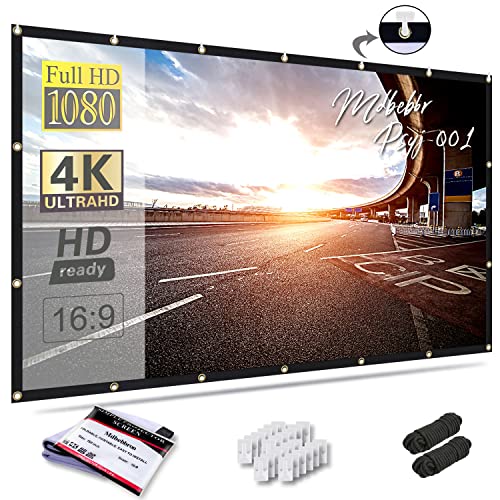
Best for: Viewers who need a portable screen that can be folded away. The Mdbebbron is a 120-inch, 16:9 fabric screen made from polyester. The listing describes it as lightweight, compact when folded, and suitable for indoor home theater use as well as presentations and outdoor movies.
The manufacturer describes the surface as smooth and anti-crease, intended to resist wrinkles from folding or crushing. Double-sided projection is also listed, which can offer more placement flexibility depending on the room arrangement.
Limitation: This is a foldable fabric screen rather than a retractable screen with a built-in stand. Buyers should plan how they will position or mount it for indoor viewing.
ZUVMITG 120-Inch Screen With Stand

Best for: Buyers who want a freestanding screen that can move between indoor and outdoor spaces. The 120-inch screen supports front and rear projection, and its stand comes with ground stakes, ropes, and sandbags for added outdoor stability.
The listed fabric is washable milk silk, with a 160-degree viewing angle. The screen is described as folding flat for storage and as having a fitted design intended to reduce wrinkles around the edges.
Limitation: The included outdoor anchoring accessories are most useful outside; buyers seeking a simple wall-mounted screen may prefer a pull-down model instead.
Buying Guide: How To Choose An Indoor Projector Screen
What screen size and shape fit the room?
Measure the available wall or mounting area before selecting a diagonal size. A 120-inch screen needs more space than the 72-inch Pyle. Also check the aspect ratio: the VIVOHOME is 1:1, while the Mdbebbron is 16:9. Match the screen shape to the content and viewing setup you plan to use.
Should you choose manual, electric, or portable?
An electric screen like the DINAH offers remote-controlled lowering and retraction. Manual pull-down models such as VIVOHOME and Pyle avoid remote operation and use a pull-and-lock mechanism. Foldable fabric screens are better for storage and changing locations, but require a way to position the screen for viewing.
Do you need a stand or a mounting surface?
Choose a screen with a stand if you need freestanding placement or want to move it between rooms. Wall- or ceiling-mounted screens are a more direct fit when you have a suitable installation location. Check the product details for included hardware; the VIVOHOME listing specifically says screws and L-brackets are not included.
Is outdoor use important?
For a screen that may be used outside, look for a portable design and practical stabilization accessories. The ZUVMITG includes stakes, ropes, and sandbags. For primarily indoor viewing, retractable models can keep the screen stored when it is not needed.
Frequently Asked Questions
What is the best projector screen type for a living room?
A retractable screen is a practical choice when you want to put the viewing surface away between uses. Choose electric operation for remote control or manual operation for a simpler pull-down setup.
Is a 120-inch projector screen suitable for every room?
No. Measure the wall or installation space first. A 120-inch screen may be too large for a compact room, where a smaller option such as the 72-inch Pyle may fit better.
What does a 1:1 screen ratio mean?
A 1:1 screen is square. It has a different shape from a widescreen 16:9 model, so check the aspect ratio when comparing screens for movies or other content.
Can a foldable projector screen be used indoors?
Yes. The Mdbebbron is listed for indoor home theater and presentation use. It folds for storage, but buyers need to plan how to position or mount the fabric screen.
Which option is easiest to store?
The Mdbebbron folds into a compact form, while the VIVOHOME rolls up and the DINAH retracts automatically. The best storage choice depends on whether you prefer a portable fabric screen or a mounted screen that stays in place.