The best RO/DI water system depends on whether you need deionized water for an aquarium or reverse-osmosis drinking water for a kitchen. The Aquatic Life RO Buddie is a compact 50 GPD aquarium option, while the Aquatic Life Twist-in system offers 75 GPD and color-changing DI resin. The iSpring and APEC models are under-sink RO systems for drinking water, not RO/DI systems; they are included for buyers comparing household filtration.
| System | Best suited for | Key distinction |
|---|---|---|
| Aquatic Life RO Buddie | Aquarium owners seeking RO/DI | Four stages; 50 GPD |
| Aquatic Life Twist-in | Higher-output aquarium use | Four stages; 75 GPD; color-changing DI resin |
| iSpring RCC7AK-BN | Drinking water with mineralization | Six-stage RO; alkaline stage |
| iSpring RCC7-BN | Under-sink drinking water filtration | Five-stage RO; NSF/ANSI 58 certification |
| APEC ROES-50 | DIY-friendly home RO filtration | Five stages; 50 GPD |
Aquatic Life RO Buddie 4-Stage Aquarium System
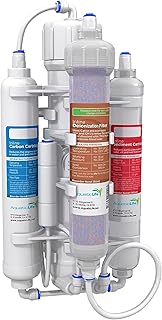
This four-stage reverse osmosis and deionization unit is rated for 50 gallons per day. Its stated uses include fish tanks, fountains, and other applications. It is best for aquarium owners who want an RO/DI system at a lower listed daily output than the 75 GPD Twist-in model.
Limitation: The provided product details do not specify individual filter stages or whether the system removes chloramines. Confirm that it suits your source water and aquarium needs before choosing it.
Aquatic Life Twist-in 4-Stage RO/DI Filter

This aquarium-focused system combines sediment, carbon, reverse-osmosis membrane, and color-changing DI resin stages. Its stated output is up to 75 gallons per day. It is best for aquarium keepers who want a higher stated capacity and a resin stage that changes color as it is used.
The manufacturer says the system removes dirt, sand, rust, and chlorine, but specifically notes that it does not remove chloramines. Its listed membrane reduction ratio is 1:10,000 for TDS. Choose this if you need RO/DI output and your water-treatment needs account for that chloramine limitation.
iSpring RCC7AK-BN Alkaline 6-Stage RO System
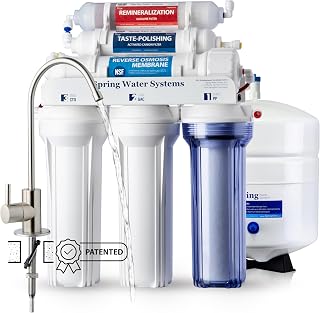
This 75 GPD under-sink RO system adds a mineral stage intended to provide water with a balanced pH and minerals. Its top-mounted fastener is designed to make countertop installation easier, and the transparent first-stage housing helps users monitor filter buildup. It is best for households seeking remineralized drinking water rather than aquarium DI water.
Limitation: This is an RO drinking-water system, not a listed RO/DI system. Choose an aquarium-specific model if deionization is required.
iSpring RCC7-BN 5-Stage Under-Sink RO System

This 75 GPD system is designed for household drinking water and includes a brushed-nickel faucet. The listing states NSF/ANSI 58 certification and reduction of TDS by 80–90%. A transparent first-stage housing allows visual filter checks, and the system requires no power source. It is best for buyers prioritizing an under-sink RO system with stated certification and contaminant-reduction information.
Limitation: It does not include a listed DI stage, so it is not a direct substitute for aquarium RO/DI filtration.
APEC Water ROES-50 5-Stage RO System

The APEC ROES-50 is a 50 GPD, five-stage under-sink RO system for home drinking water. Its listing describes quick-connect fittings and colored tubing intended to simplify setup and maintenance. It is best for homeowners who want a DIY-oriented kitchen RO system and do not need a DI stage.
Limitation: This model is presented as drinking-water RO filtration, not RO/DI. Its 50 GPD rating is also lower than the 75 GPD household systems listed above.
Buying Guide: How to Choose an RO/DI Water System
Do you need RO/DI or drinking-water RO?
RO/DI systems add deionization after reverse osmosis and are commonly selected for aquarium applications that call for very low dissolved solids. Household RO systems may instead include a mineral or alkaline stage for drinking water. Do not assume that an RO drinking system produces DI water; check the listed stages and intended use.
How much daily output do you need?
Compare the stated gallons-per-day rating with your expected water use. The aquarium options listed here are rated at 50 and 75 GPD, while the household systems range from 50 to 75 GPD. Actual production can depend on conditions not provided in these product details, so treat the rating as a comparison point rather than a guaranteed household yield.
Which filtration details matter?
For aquarium use, check the sediment, carbon, RO membrane, and DI stages, along with how DI resin condition is indicated. Also verify whether the system handles contaminants relevant to your source water. The Twist-in model specifically states that it does not remove chloramines. For drinking water, compare certification, stated contaminant-reduction information, mineralization, and installation design.
Will installation and maintenance fit your setup?
Consider the available under-sink or aquarium installation space, the system’s connections, and how you will monitor or replace filters. The iSpring RCC7AK-BN highlights a top-mounted fastener, while the APEC ROES-50 lists quick-connect fittings and colored tubing. Review the manufacturer’s instructions for installation and filter maintenance before purchase.
Frequently Asked Questions
What is the difference between RO and RO/DI?
RO uses a reverse-osmosis membrane to reduce dissolved substances. RO/DI adds a deionization stage after the membrane to further reduce ions in the water.
Can I use an under-sink drinking RO system for an aquarium?
These listed iSpring and APEC models are described as drinking-water RO systems and do not list a DI stage. Choose an aquarium RO/DI system when deionized water is required.
Which listed aquarium system has the higher stated output?
The Aquatic Life Twist-in system is rated up to 75 GPD, compared with 50 GPD for the Aquatic Life RO Buddie.
Does the Aquatic Life Twist-in remove chloramines?
No. Its product details specifically state that it does not remove chloramines.