Energy independence meets convenience with plug-in solar panel kits that connect directly to a wall outlet. This guide highlights five top options, ranging from compact 100W panels to larger grid-tied systems, and even a portable generator with a solar panel. Each choice aims to reduce grid consumption, provide backup power, and support outdoor adventures. Compare efficiency, portability, warranties, and compatibility to find the best fit for your needs.
| Product | Brand | Key Benefit | Approximate Use |
|---|---|---|---|
| Plug and Play Solar Panel Power with 800-Watt Solar Panels | PLUGGEDSOLAR | High wattage, direct wall plug | Home energy and backup |
| 1.8KW PluggedSolar with 1800Watt Crystalline Panels | PLUGGEDSOLAR | Strong daily generation, UL-certified | Home/good sized load support |
| ECO-WORTHY 200 Watts Kit | ECO-WORTHY | Balanced kit with PWM controller | RV, off-grid, travel |
| ZOUPW 100W Portable Panel | ZOUPW | Portable, versatile connectors | Camping, camping gear, small power stations |
| VERVERAY Solar Panel for Ring/Wyze | VERVERAY | Camera charging on the go | Security cameras, outdoor setups |
Plug and Play Solar Panel Power — 800W Kit
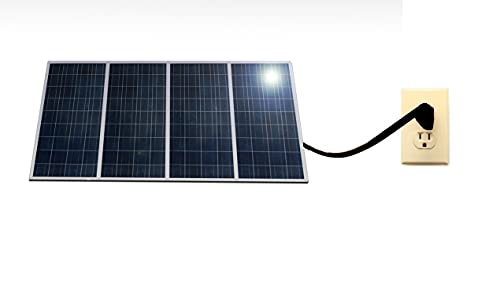
PLUGGEDSOLAR offers a plug-and-play 800-watt solar panel system designed for quick setup. The kit emphasizes simple sun exposure followed by feeding power directly to a wall outlet. It estimates yearly generation around 1500 kWh and claims potential bill savings of 20% to 40% for a typical home. This option is ideal for users seeking a straightforward method to reduce daytime grid usage without complex installation.
1.8KW PluggedSolar with 1800Watt Crystalline Panels

This PLUGGEDSOLAR setup combines 1800W of crystalline solar panels with a micro grid-tie inverter and a wall outlet connection. It highlights a 30% federal solar tax credit, with additional local rebates possibly available. Daily generation estimates reach 7.5 kWh in full sun, supported by mono-crystalline cells and a 25-year warranty. The included micro grid-tie inverter is UL 1741 certified for islanding protection and interconnection readiness.
ECO-WORTHY 200W Solar Panel Kit

The ECO-WORTHY kit provides a 200W monocrystalline panel paired with a PWM charge controller. It’s positioned for RVs, campers, and off-grid applications, delivering up to 800 Wh per day under optimal sun. The panel features a corrosion-resistant aluminum frame and IP65-rated junction box. The kit is designed to withstand wind and snow loads, supporting long-term outdoor use across various vehicles and cabins.
ZOUPW 100W Portable Solar Panel

ZOUPW’s 100W panel emphasizes portability and connectivity. It uses 23.5% efficiency monocrystalline cells with a foldable design and IP67 waterproofing. The kit includes a true 5-in-1 universal connector set compatible with most popular power stations, enabling seamless charging on the go. A dual kickstand arrangement allows angled sun capture for improved charging efficiency in limited daylight.
VERVERAY Solar Panel for Ring/Wyze Cameras

The VERVERAY solar panel is designed to charge Ring Stick Up Cam Plus/Pro and Wyze outdoor cameras. It provides a 6W charging capability with a compact design and a 16-foot cable, enabling flexible placement. The panel features an adjustable mounting bracket for sun exposure optimization and a waterproof construction for outdoor use, making it suitable for security camera setups in outdoor areas.
Buying Guide: Key Purchase Considerations
- Output and viability: Higher wattage panels produce more energy but require appropriate in-home wiring or device compatibility. Determine whether you want grid-tied, battery-ready, or purely wall-plug operation.
- Portability vs. permanence: Portable panels excel for camping and travel, while larger kits suit steady home use. Foldable designs balance transportability with efficiency.
- Compatibility: Confirm that your power station, inverter, or electrical circuit can handle the panel’s output. Check voltage, amperage, and connector compatibility for a seamless setup.
- Durability and weather resistance: Look for corrosion-resistant frames, IP ratings, and robust cabling for outdoor installations. Consider wind and snow load ratings for roof or ground mounts.
- Warranty and support: A longer warranty signals confidence in longevity. Review terms for panels, inverters, and included charging controllers.
- Installation effort: Wall-plug kits require minimal tools, while more complex setups may need electrical work or professional installation. Balance convenience with safety.
- Efficiency and climate: Monocrystalline cells typically outperform polycrystalline in partial sun conditions. hotter climates may affect performance, so account for temperature and shade.
- Financial incentives: Federal tax credits, state rebates, and utility programs can reduce upfront costs. Verify eligibility and timeframes before purchase.
In selecting a plug-in solar solution, weigh daily energy needs, outdoor usage, and desired level of self-sufficiency. The listed options offer a spectrum from compact, plug-and-play units to more robust, wall-outlet-compatible systems, each with distinct advantages for residential power, remote camping, or security camera setups.