In modern networks, a robust Layer 3 managed switch is essential for scalable routing, traffic segmentation, and reliable QoS. The following selections emphasize high performance, security features, PoE options, and straightforward management to fit mid-to-large setups. Each model supports Layer 3 routing, VLANs, QoS, and SNMP, helping IT teams optimize traffic flow across departments while keeping administrative overhead manageable. Below is a quick snapshot of the top five picks to consider.
| Product | Brand | Key Features |
|---|---|---|
| SODOLA 8 Port 10G L3 Managed Switch | Sodola | 8x 10G SFP+, Layer 3 management, QoS, VLAN, IGMP, LACP |
| TP-Link TL-SG2008P | TP-Link | 4 PoE+, Omada SDN, IPv6, static routing |
| MokerLink 8 Port 10G Managed | MokerLink | 8x 10G, L3 Web/CLI, VLAN, QoS, security features |
| NETGEAR MS108EUP | NETGEAR | 8 ports, PoE+, multi-gig capability, cloud/app management |
| Cisco WS-C3850-48P-S (Renewed) | Cisco | 48-Port PoE+, Layer 3, extensive feature set |
Each option below is evaluated for practical deployment: ease of setup, management interface quality, PoE needs, port density, and future-proofing for growing networks. The selections span budget-friendly to enterprise-grade layers, all offering meaningful Layer 3 capabilities beyond basic switching.
SODOLA 8 Port 10G L3 Managed Switch

This 8x10G SFP+ switch is designed for high-density networks needing scalable performance. It operates with 10G/2.5G adaptive default ports, and requires separate SFP+ transceivers for fiber or copper connections. Layer 3 features cover iPv4/iPv6 routing, DHCP, VLAN, QoS, IGMP, STP, and SNMP via a web interface, enabling centralized control. The device offers console or web management and supports DoS protection and SNMP monitoring for administrative oversight. A fanless, wall-mount design fits compact or quiet office environments.
Key considerations
- Transceivers are separate; plan for compatible SFP+ modules.
- Management requires IPv4 configuration before login and matching link speeds between PC and switch during initial access.
- Ideal for networks needing strong Layer 3 routing, VLAN segmentation, and QoS in a compact form factor.
TP-Link TL-SG2008P Jetstream
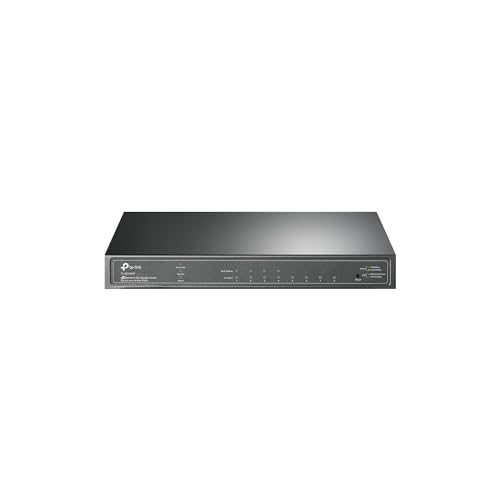
This 8-port Gigabit Smart Switch blends PoE capabilities with Omada SDN integration for centralized management. With 4 PoE+ ports and 4 non-PoE ports, it supports up to 62W total PoE budget, enabling IP cameras, phones, and wireless access points to operate from a single device. The Omada SDN framework provides cloud access and centralized control, which can simplify multi-site deployments while enabling scalable policy enforcement, QoS, and VLAN segmentation. Static routing and IPv6 support add depth for growing networks.
Key considerations
- VLAN, QoS, and static routing capabilities support structured enterprise networks.
- Omada SDN integration simplifies multi-device management.
- Power budget should align with PoE device requirements and future expansion.
MokerLink 8 Port 10G Managed Switch

The MokerLink device brings 8x 10G ports with auto-adaptive rates (10G/5G/2.5G/1G/100M). It supports Layer 3 routing (IPv4/IPv6) and a robust set of Layer 2 features, including VLAN, ACLs, QoS, DHCP, and multicast. Security is addressed with 802.1X, DoS protection, DHCP Snooping, and IP Source Guard. The switch includes CLI and web management, along with diagnostic tools like port mirroring and trace routes, to help isolate issues and optimize traffic paths. It’s suitable for environments requiring strong routing alongside detailed traffic controls.
Key considerations
- Higher port density with 10G parity supports demanding workloads.
- Extensive security and diagnostic features aid fault isolation.
- Web/CLI management provides flexible administration options.
NETGEAR MS108EUP Ultra60

NETGEAR’s Ultra60 combines eight ports with PoE capability in a compact form, supporting multi-gig and PoE use cases. The device is designed for desktop or wall-mount deployment and includes a cloud-access layer for remote management through the NETGEAR ecosystem. The PoE functionality supports powering devices while maintaining straightforward integration with existing infrastructure. It’s a practical choice when PoE needs align with a small footprint and cloud-based management is desired.
Key considerations
- PoE distribution and a cloud-enabled management workflow.
- Compact desktop or wall-mount form factor.
- Suitable for deployments that prioritize ease of management and PoE support over dense L3 routing complexity.
Cisco WS-C3850-48P-S Catalyst 3850 (Renewed)

The Cisco Catalyst 3850 is a well-known enterprise-grade switch featuring PoE+, a large port count, and substantial Layer 3 capabilities. While the item is renewed, it remains a robust option for organizations requiring a proven platform with a broad feature set, including extensive routing, QoS, security, and high reliability. The physical specs indicate a sizable footprint typical of enterprise deployments. This choice suits networks seeking long-term continuity with a trusted vendor and strong support ecosystems.
Key considerations
- Renewed units may present cost benefits with reliable Cisco firmware and support options.
- Large port density and advanced routing features support complex enterprise networks.
- Ensure compatibility with existing licensing and lifecycle requirements.
SODOLA 10Gb L2 Managed PoE Switch

This 10G PoE-capable switch includes 4 x 10G PoE ports, 1 x 10G RJ-45 port, and 1 x 10G SFP+ uplink. It supports IEEE 802.3af/at/bt with a total pool of 150W, providing substantial power for PoE devices while enabling high-speed uplinks. Layer 2 management features cover VLAN, SNMP, DHCP, multicast, and security controls, with a focus on PoE-powered deployments. This model suits networks needing PoE at the edge alongside robust Layer 2 management and a 10G uplink path.
Key considerations
- Strong PoE power budget for multiple devices.
- 1x10G uplink supports rapid aggregation to core switches.
- Layer 2 emphasis with practical management features for campus deployments.
Buying Guide: Key Purchase Considerations and Comparisons
When selecting a managed Layer 3 switch, consider network size, traffic patterns, and future growth. Here are essential factors to evaluate:
- Layer 3 capabilities: Verify routing features (static/dynamic routing, IPv4/IPv6, ACLs) and ensure QoS aligns with your application requirements like VoIP or video conferencing.
- Port density and speeds: Decide between 1G, 2.5G/5G/10G uplinks, and PoE needs for cameras, phones, and access points. Higher density reduces bottlenecks at the edge.
- PoE/PoE+: Budget and power management: For IP cameras and wireless APs, PoE budgets matter. Ensure per-port limits meet device requirements and total power support.
- Management model: Web UI, CLI, SNMP, and cloud-based management (Omada, NETGEAR Cloud, etc.) affect operational ease. Centralized management helps multi-site consistency.
- Security and reliability: Look for DoS protection, 802.1X, DHCP Snooping, IP Source Guard, and robust firmware update paths. Consider redundancy options if critical uptime is required.
- Deployment footprint: Wall-mountable vs. desktop, fanless vs. active cooling, and noise levels may impact placement in offices or data rooms.
- Vendor ecosystem and support: Long-term firmware updates, access to licenses, and hardware warranty influence total cost of ownership.
- Renewed vs. new hardware: Renewed Cisco devices offer cost savings; confirm warranty and condition details with the seller.
In practice, for small-to-medium networks with PoE needs, a compact 8-port PoE switch paired with a separate high-performance core can reduce complexity. For larger campuses, the combination of a high-density 10G edge with Layer 3 routing and centralized SDN management yields scalable, predictable performance. Always map your topology first: edge devices to access points, uplinks to core, and a management network isolated from data traffic where possible.