Choosing the right live stream encoder hardware ensures reliable broadcast quality across platforms like YouTube, Facebook, Twitch, and more. This article highlights five capable encoders that support varied protocols, multi-channel outputs, and high-resolution input handling. Each option emphasizes bandwidth efficiency, flexible streaming, and easy network setup to suit professional and novice streamers alike.
| Product | Brand | Key Strength |
|---|---|---|
| UNISHEEN 1080P60 HDMI Encoder | UNISHEEN | 1080p60, H.265/H.264, dual streams, LAN distribution |
| URayCoder HEVC H265 H264 4K HDMI to Ethernet | URayCoder | 4K input, multi-protocol output, multi-streams |
| URayCoder H.265 H.264 HDMI to IP Network Encoder | URayCoder | 4 streams, wide protocol support, customizable |
| ORIVISION 4 Channel 4K H.265 Encoder | ORIVISION | 4 HDMI inputs, up to 16 feeds, LCD status |
| URayCoder Multi-channel 4K SDI to IP Encoder | URayCoder | 4K SDI to IP, multiple protocols, multi-platform |
Note: This overview focuses on common capabilities like high-resolution input, H.265/H.264 encoding, multiple streaming protocols, and multi-channel outputs. Availability and exact feature sets vary by model and firmware updates. Always verify compatibility with your preferred streaming platforms and network environment before purchase.
Introduction To Live Stream Encoders
Live stream encoders convert raw video from cameras or capture devices into broadcast-ready streams for online platforms. Hardware encoders tend to deliver lower latency and more consistent performance than software solutions, particularly in demanding environments with unstable networks. The products below exemplify a range of form factors, from compact units to multi-channel rack-mount devices, all designed to support modern protocols such as RTMP, RTSP, SRT, HLS, and UDP multicast. They also provide features like multiple streaming outputs, embedded audio management, and on-device video editing controls to help brands maintain a consistent look across channels.
Product Showcases
style=”display:none;”>UNISHEEN 1080P60 Encoder
UNISHEEN 1080P60 HDMI Encoder

The UNISHEEN HDMI encoder supports 1080P at 60fps and encodes with H.265 or H.264 standards, delivering high-quality streams with efficient bandwidth use. It enables two simultaneous video streams without a computer, simplifying setups for multi-platform broadcasts. LAN support includes multicast, unicast, and IPTV with a configurable web interface, aiding easy local-network distribution and device management.
URayCoder 4K HDMI To Ethernet Encoder
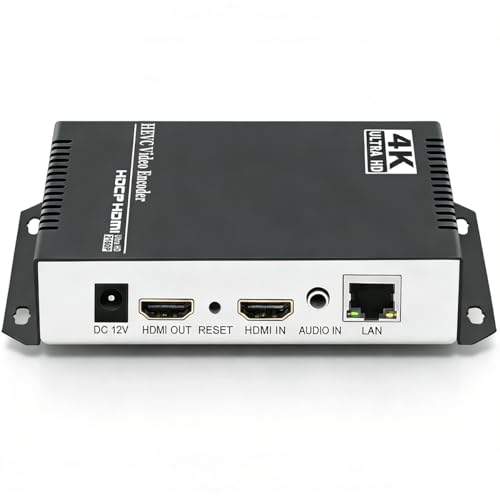
Equipped with a dual encoding chip (H.265/H.264), this device handles 4K UHD input with up to 30fps at 4K and up to 120fps at 2K. It supports HDCP decryption and can output four parallel streams with different protocols. It’s designed for professional streaming to multiple platforms such as YouTube, Facebook, and Twitch, with one-click live broadcasting. The encoder also allows static text, captions, logos, and timestamps, enabling a branded live stream experience.
URayCoder H.265 H.264 HDMI To IP Network Encoder

This URayCoder model focuses on flexible protocol support including RTSP, RTMP(S), SRT, HLS M3U8, UDP, and more. It supports four independent video streams with different protocols, facilitating simultaneous multi-platform broadcasts. The device offers extensive customization options like text overlays, logos, captions, and timestamps, along with dual HDMI audio and line-in audio inputs for richer sound control during live streams.
ORIVISION 4 Channel 4K H.265 Encoder

ORIVISION provides a 4-channel HDMI input setup with H.265/H.264 and an LCD for real-time status. It can broadcast to up to 16 feeds across multiple platforms using RTMP, RTSP, UDP, HLS, SRT, and more. The device supports up to 4K input at 30Hz and up to 2K/1080P at 60Hz, enabling high-quality multi-network delivery. Its build is oriented toward professional venues like hotels or broadcast studios requiring robust multi-channel output.
URayCoder Multi-channel 4K SDI Encoder

Designed for environments needing SDI input, this URayCoder encoder handles multi-channel 4K streams with support for HTTP, RTSP, RTMPS, UDP, HLS, SRT, and multicast. It can push multiple streams to different servers with one click, suitable for large-scale productions or facilities requiring synchronized output across several destinations. The device’s versatility extends to compatibility with streaming software like OBS and Vmix, enabling integration into existing broadcast workflows.
Buying Guide: Key Purchase Considerations
- Video resolution and frame rate: Match the encoder’s maximum to your camera output and desired streaming quality. Higher resolutions and frame rates demand more bandwidth and processing power.
- Streaming protocols: Ensure support for RTMP(S), RTSP, SRT, HLS, UDP, and multicast if you plan to broadcast to multiple platforms or on-premise players. Compatibility with your preferred platforms matters for a frictionless setup.
- Multi-channel outputs: If you need simultaneous streams to several services, verify the number of supported outputs and whether different protocols can be used for each stream.
- Input options: HDMI is common, but some models offer SDI or multiple HDMI inputs. Consider whether you need embedded audio, external audio inputs, or both.
- Brand support and firmware updates: Regular updates improve compatibility with platforms and fix security issues. Check for active support channels and documentation.
- Network and management features: Web-based configuration, static IP options, multicast support, and LAN distribution can simplify deployment in offices, studios, or venues.
- Display and monitoring: An on-board LCD or status interface helps monitor inputs, outputs, bitrate, and health without external tools.
- Budget vs. scalability: For future expansion, choose devices with higher channel counts or modular options to avoid early obsolescence.