When you need reliable, high-capacity storage for photos, videos, documents, and backups, choosing the right device matters. This guide highlights large-capacity USB drives and memory sticks that offer ample space, fast transfer speeds, and cross‑device compatibility. Whether you’re archiving years of footage or expanding a mobile library, these options provide scalable storage without breaking the bank. Below you’ll find five top picks, a quick product summary, and practical buying considerations to help you compare features and performance.
| Product | Brand | Capacity | Interface | Key Benefit |
|---|---|---|---|---|
| Amazon Basics 256 GB Ultra Fast USB 3.1 | Amazon Basics | 256 GB | USB 3.1 | High-speed transfers for photos, videos, and music |
| Techkey 128GB 3in1 USB/Lightning/Type C | Techkey | 128 GB | USB/Lightning/Type C | Cross‑device compatibility for iOS, Android, and PC |
| Techkey 256GB 3in1 USB/Lightning/Type C | Techkey | 256 GB | USB/Lightning/Type C | More space with multi‑port convenience |
| Techkey 256GB 3in1 USB/Lightning/Type C Pink | Techkey | 256 GB | USB/Lightning/Type C | Compact, color‑coded option with secure backup |
| GNASEET USB 512GB | GNASEET | 512 GB | USB 3.0 | Extra large capacity for extensive media libraries |
Note: Actual usable capacity can be less than labeled due to formatting and system storage rules. All items support plug‑and‑play use across compatible devices, with several models offering cross‑platform backup and sharing features to simplify data management.
Amazon Basics 256 GB Ultra Fast USB 3.1
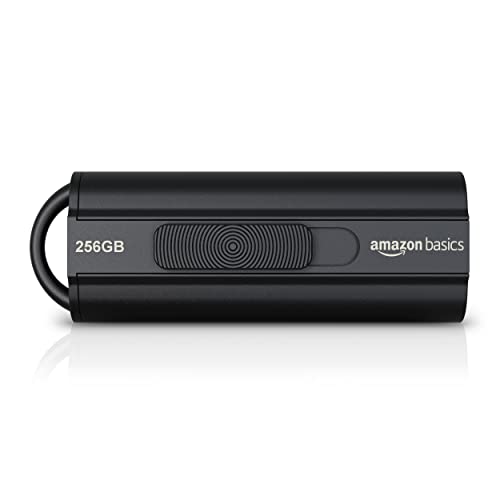
The Amazon Basics drive offers a spacious 256 GB capacity with USB 3.1 performance. Read speeds up to 130 MB/s enable quick transfers of large media files, making it suitable for backing up 4K video clips, photo libraries, and music collections. The device is compact and portable, convenient for travel or on‑the‑go storage. Users should note that actual available space may vary slightly depending on device formatting and operating system interpretation of capacity.
Techkey 128GB 3in1 USB/Lightning/Type C

This MFi‑certified flash drive provides a 128 GB capacity with USB, Lightning, and USB‑C interfaces, enabling seamless data transfer among iPhone, iPad, Android, and PCs. The design emphasizes durability with metal construction and protective features such as dustproof and anti‑magnetic performance. It includes one‑click backup and sharing through a companion app, helping users free space on mobile devices and share files quickly without cables or cloud services.
Techkey 256GB 3in1 Grey USB/Lightning/Type C

This 256 GB Techkey model continues the 3‑in‑1 approach, supporting USB, Lightning, and USB‑C connections. It is built for portability and quick on‑the‑go backups, especially for users who switch between Apple devices and Android or PC environments. The device emphasizes one‑click backup and easy sharing, with a practical keychain attachment for everyday carry. Compatibility notes highlight the need for relevant apps on iOS to access stored content.
Techkey 256GB 3in1 Pink USB/Lightning/Type C
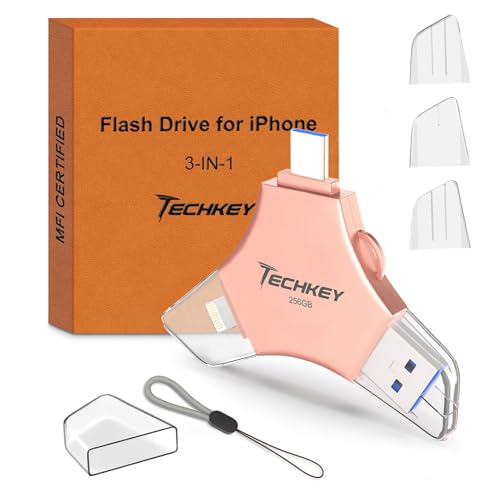
The pink variant offers the same 256 GB capacity and cross‑platform compatibility, with emphasis on portability and easy data management. Like other 3‑in‑1 models, it supports one‑click backup and sharing through the accompanying app, helping users manage photos, videos, and documents across devices. It remains compact enough for daily carry and travel use, providing a convenient way to expand device storage without a traditional hard drive.
GNASEET USB 512GB

The GNASEET 512 GB USB 3.0 flash drive delivers a substantial capacity for large media libraries and extensive backups. Its larger storage footprint is especially suitable for high‑resolution video archives, bundled photo collections, and offline data repositories. The device focuses on straightforward plug‑and‑play usage, with the potential to encrypt sensitive files via companion apps. When planning use, consider how often you’ll perform transfers and whether cross‑device compatibility is key for your workflow.
Buying Guide: Key Considerations For Large Storage Devices
- Capacity and future needs: Assess whether you need 128 GB, 256 GB, or 512 GB today, and whether your data growth requires room for multicategory backups and media libraries.
- Interface and speed: USB 3.1/3.0 interfaces offer faster read/write speeds, reducing transfer times for large files. Check supported speeds and device compatibility with your computer or mobile device.
- Cross‑device compatibility: For users moving between iOS, Android, and PC/Mac, 3in1 solutions (USB/Lightning/Type C) simplify data transfers without adapters.
- Durability and build quality: Consider metal housings, protective features, and resistance to dust or drops if you plan to carry drives in bags or pockets.
- Backup features: One‑click backup, automatic storage, and ease of sharing can streamline workflows and reduce manual steps.
- Security and privacy: Some drives offer encryption or password protection via dedicated apps, which is important for sensitive personal or business data.
- Portability vs. storage density: Larger drives provide more capacity, but smaller form factors are easier to conceal and travel with.
- Firmware and app support: Ensure the device has an active app ecosystem or straightforward driver support for your operating system.
- Price-to-capacity balance: High capacity is useful, but compare price per GB to determine long‑term value and whether alternative storage options (external SSDs, cloud backups) better fit your needs.
Overview: For users requiring substantial on‑device storage with broad compatibility, the reviewed options cover a spectrum from compact 128–256 GB cross‑platform drives to a higher‑capacity 512 GB model. Each offers practical advantages, depending on whether speed, portability, or sheer capacity drives your decision. When selecting, balance capacity with transfer speed, device compatibility, and security features to align with your data management goals.