Choosing a reliable human presence detection sensor is key for smart home automation, energy efficiency, and security. The following five products represent top options that combine radar, PIR, and smart features to detect people—whether moving or stationary—across rooms. This guide compares capabilities, integration, and deployment scenarios to help you pick the right sensor for your setup.
| Product | Brand | Core tech | Best for |
|---|---|---|---|
| LD2410C Sensor Module HLK-LD2410 | EC Buying | 24GHz FMCW radar | High-sensitivity presence in compact spaces |
| Human Presence Sensor v2.2 for Home Assistant | AKAMATIΣ | 2.4 GHz radar, Seeed C3, ESPHome-ready | Plug-and-play Home Assistant automation |
| Meross Matter Human Presence Sensor | meross | mmWave radar + PIR + light sensor | Matter ecosystem with HomeKit and multi-platform support |
| LD2410C Sensor Module (3 PCS) | Qoroos | 24GHz FMCW radar | Multi-sensor setups with LD2410C |
| LD2420 Smart Radar Sensor Module | ZORZA | 24GHz mmWave radar, GPIO/UART | Precision presence with flexible integration |
Note: All products listed are designed for indoor use with various integration paths. Capabilities vary from detecting moving and static presence to providing distance estimates and multi-sensor fusion for smarter automation decisions.
EC Buying LD2410C Sensor Module HLK-LD2410

LD2410C uses 24GHz FMCW radar to detect human presence within a set space. The module combines radar signal processing with an advanced human body detection algorithm to determine target distance and other parameters. It remains sensitive to moving, static, inching, and seated or lying postures, enabling robust presence sensing beyond traditional methods.
AKAMATIS Human Presence Sensor v2.2 for Home Assistant

Advanced radar sensing with a 2.4 GHz module detects both moving and stationary objects up to 6 meters indoors. It offers higher precision and broader coverage than many traditional PIR sensors, and is designed for easy integration with Home Assistant via a ready-to-use ESPHome firmware, with USB-C power for a compact, battery-free setup.
Meross Matter Human Presence Sensor

The meross sensor combines radar, PIR, and a built-in light sensor to deliver presence detection and lighting automation. It supports Matter, HomeKit, Alexa, Google Home, and Home Assistant, enabling local control and broad compatibility. A continuous power supply is required, and Matter compatibility may require a compatible hub for certain ecosystems.
ZORZA LD2420 2Pcs Smart Radar Sensor
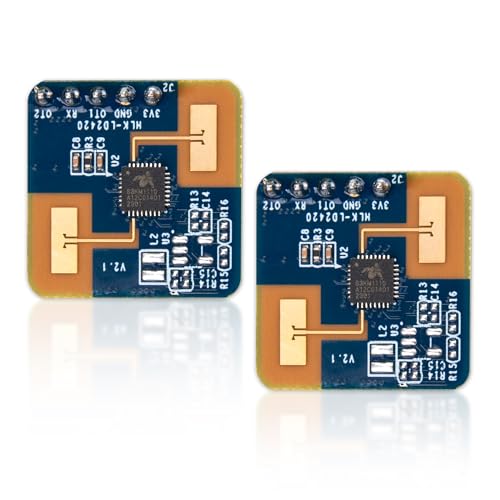
LD2420 employs 24GHz mmWave radar for precise presence and micro-motion detection within an 8-meter range. It supports GPIO and UART interfaces for flexible integration into smart lighting, appliances, or security systems, making it suitable for advanced home automation projects.
Buying Guide: Key Purchase Considerations
- Detection capabilities: Consider whether you need motion-only sensing or true presence detection, including static or micro-motion postures. Radar-based sensors typically outperform PIR for presence in many scenarios.
- Range and field of view: 6–9 meters is common, with wide-angle variants offering broader coverage. Choose based on room size and layout.
- Power and installation: USB-C powered modules eliminate batteries, while battery-powered options offer wireless placement. Assess ease of installation and cable management.
- Integration and ecosystem: If you use Home Assistant, Matter, or Apple HomeKit, prioritize devices with ready firmware or compatible hubs for local control and privacy.
- Latency and responsiveness: Local processing tends to yield faster automations; cloud-reliant devices may introduce delays in critical automation use cases.
- Multi-sensor capability: Some models pair radar with PIR and light sensors, improving accuracy and enabling more nuanced automations (e.g., lighting, climate, and security).
- Adjustability: Look for tunable sensitivity, delay times, and zone configurations to tailor detection to your space and avoid false alarms.
- Cost of ownership: Battery life, hub requirements, and maintenance should be weighed against the value of precise presence detection in your home.
- Security and privacy: Opt for devices that emphasize local control, encrypted communication, and minimal reliance on cloud services when privacy is a priority.
Selecting the right human presence sensor involves balancing sensing accuracy, integration ease, and your preferred smart home ecosystem. The listed options provide a spectrum—from compact LD2410C modules to multi-sensor platforms—so you can tailor a setup that optimizes automation, comfort, and energy usage in your space.