If you need portable, battery-friendly test equipment that can capture waveforms anywhere, a hand held digital oscilloscope is a practical choice. This article highlights top models with strong performance, easy operation, and essential features like multiple channels, triggers, and built‑in measurement capabilities. Each pick balances portability with reliable measurement functionality for hobbyists, students, and field technicians alike.
Summary table of selected products
| Product | Brand | Bandwidth | Channels | Key Features |
|---|---|---|---|---|
| FNIRSI 2C53T Upgraded Handheld Oscilloscope | FNIRSI | 50 MHz | 2 | 250 MSa/s, math ops, persistence, XY mode, DDS generator, multimeter functions |
| FNIRSI DSO152 Handheld Oscilloscope | FNIRSI | 200 kHz | 1 | 2.5 MS/s, 2.8″ display, full trigger modes, portable |
| FNIRSI DPOS350P 4-in-1 Tablet Oscilloscope | FNIRSI | 350 MHz | 2 | Oscilloscope, spectrum analyzer, frequency response analyzer, 7″ touchscreen |
| HANMATEK HO52 Handheld Oscilloscope | HANMATEK | 50 MHz | 2 | 7″ TFT, multimeter, XY mode, USB-C, auto calibration |
| Siglent SDS1202X-E 200 MHz Digital Oscilloscope | Siglent | 200 MHz | 2 | Real-time 1 GSa/s, longest memory, high sampling integrity |
FNIRSI 2C53T Upgraded Handheld Oscilloscope

The FNIRSI 2C53T is a sophisticated handheld oscilloscope with 50 MHz bandwidth and a 250 MSa/s sampling rate. The device supports 2 channels, a record depth of 1 Kpts, and a maximum voltage of 400 V. It also functions as a 4.5-digit multimeter with ranges for AC/DC voltage, current, resistance, and capacitance, plus diode and continuity tests. Added capabilities include math operations, cursor measurements, persistence mode, XY mode, waveform image storage, and export options, making it suitable for professionals and educators who need multifunctional field testing.
Features to note: 50 MHz bandwidth, 250 MSa/s sampling, 1 Kpts depth, two channels, and an integrated multimeter suite. The device supports waveform storage and export, making it easier to document and share measurements. The upgraded version expands measurement range and adds advanced math and display options for more detailed analysis.
FNIRSI DSO152 Handheld Oscilloscope

The DSO152 offers a compact 2.8″ TFT display with a real-time sampling rate of 2.5 MS/s and a bandwidth of 200 KHz. It supports full trigger modes (Auto, Normal, Single) and measures voltages up to 400 V. This pocket oscilloscope is assembled for immediate use, emphasizing portability and ease of use for field work and classroom demonstrations. It suits quick diagnostics and signal observations without the need for extensive setup.
Key advantages include its lightweight design, pocketable form, and straightforward operation. While bandwidth is modest compared to larger scopes, it remains adequate for basic digital and analog signals, hobby projects, and entry-level learning environments.
FNIRSI DPOS350P 4-in-1 Tablet Oscilloscope

The FNIRSI DPOS350P combines four tools in one handheld device: a 350 MHz oscilloscope, a spectrum analyzer, a frequency response analyzer, and a DDS generator. With 2 channels, 1 GSa/s sampling, and a 7″ touchscreen, it excels in detailed signal analysis, EMI checks, and Bode-plot style measurements. It includes real-time waveform visualization, ample depth for waveform analysis, and a robust interface for on-site testing and education. The large display makes it easier to decipher complex signals in field conditions.
Highlights include a wide bandwidth, high sampling rate, and the ability to perform frequency response and spectrum analysis directly on a rugged handheld unit. This makes it a strong choice for electronics designers and service technicians who require a portable yet capable instrument.
HANMATEK HO52 Handheld Oscilloscope
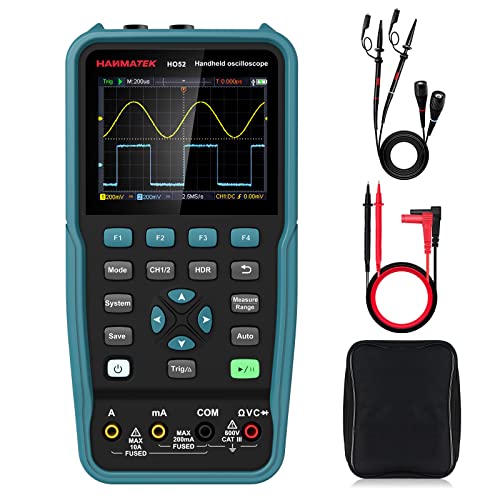
HANMATEK’s HO52 offers a 50 MHz bandwidth with two channels and a 250 MSa/s sampling rate. It includes a 3.5″ TFT display, XY functionality, and a 4 1/2 digit multimeter functionality for quick voltage, current, resistance, diode, and capacitor tests. The device supports auto-calibration, data storage, and USB-C connectivity for charging and data transfer. It is designed for on-site debugging, training environments, and technician work where portability and multimeter capability are essential.
Practical attributes include a robust metering mode, a flat 750 V AC/1000 V DC input limit, and the convenience of USB-C for power and data. The combination of oscilloscope and multimeter modes makes it a versatile tool for mixed measurement tasks in dynamic field scenarios.
Siglent SDS1202X-E 200 MHz Digital Oscilloscope
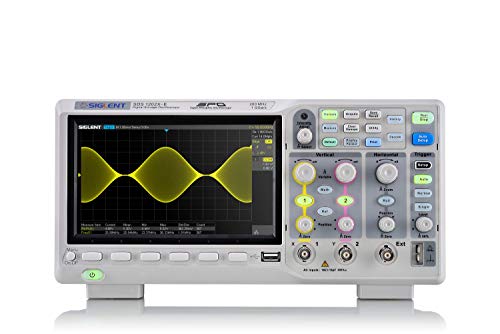
Siglent’s SDS1202X‑E delivers 200 MHz bandwidth with 2 channels and real-time sampling up to 1 GSa/s. It offers a generous memory depth and advanced triggering options, ensuring precise capture of complex waveforms. This model is well-suited for more demanding lab or field work where higher frequency signals are encountered and detailed analysis is required. The device is known for stable performance, intuitive menus, and strong software support for future expansion or firmware updates.
Considerations include its higher performance tier, capable for lab-grade signal measurements, and the trade-off of slightly larger size and price compared to entry-level handheld units. It remains a leading option for professionals seeking portability without compromising on scope capabilities.
Buying Guide
When choosing a handheld digital oscilloscope, consider these key factors to balance portability, capability, and value:
- Bandwidth and sampling rate: Higher bandwidth (MHz) and sampling rate (MSa/s or GSa/s) enable clearer capture of fast edges and high-frequency signals. If you work with RF or mixed-signal environments, prioritize models around 100–350 MHz.
- Number of channels: Two-channel units simplify differential measurements and comparative analysis. For more complex signals, a two-channel model is typically sufficient in the handheld category.
- Memory depth and waveform storage: Deeper memory allows longer acquisitions and better envelope analysis. Look for models offering on-device storage and export options.
- Triggers and measurement features: Auto, Normal, Single triggers are standard; advanced triggers (pulse width, edge, rise/fall time) aid in capturing elusive events. Built-in measurement functions (voltage, current, resistance, capacitance) add versatility for quick checks.
- Display and form factor: A readable screen (2.8″ to 7″) with good brightness and contrast reduces eye strain. A larger display helps interpret complex waveforms, especially with XY mode or spectrum views.
- Power and connectivity: Battery life, USB-C power, and on-device data transfer capabilities influence field usability. Some models offer integration with PCs for data logging and review.
- Multifunction capability: Some units combine oscilloscope, multimeter, DDS generator, and spectrum analyzer. Consider whether a combined tool saves space and weight for your workflow.
- Brand and support: Reputable brands provide better firmware updates, documentation, and customer support, which matters for field reliability and long-term use.
To optimize performance, match the tool to typical tasks: hobby projects and classroom work may do well with 50–200 MHz handhelds, while field technicians dealing with fast digital signals and EMI checks may benefit from higher bandwidth devices such as 350 MHz models or higher. Assess whether you value a touchscreen interface, data export options, and built-in automation for repetitive tests.
Overall, the best hand held digital oscilloscope for you anchors on your signal frequency, required channels, and whether you need additional functions like spectrum and frequency response analysis. The options above provide a spectrum of capabilities—from compact entry-level devices to feature-rich multi-tool instruments—designed to support reliable measurements in diverse environments.