Discover top laser engraving machines capable of precise glass etching and versatile material handling. This guide highlights five standout options, with clear specs and practical insights to help you compare for projects ranging from custom glassware to detailed wooden and metal engravings. Each pick is evaluated for accuracy, speed, software compatibility, and overall value.
| Product | Laser Power | Working Area | Key Strength |
|---|---|---|---|
| ACMER S1 Laser Engraver (3500mW) | 3500mW | 130×130 mm | High precision, versatile for wood, acrylic, metal, glass |
| ACMER S1 Laser Engraver (6000mW) | 6000mW | 130×130 mm | Greater depth and detail on tough materials |
| xTool F1 Lite | Varies (LED diode-based system in kit family) | Compact portable size | Ultra-fast speed and portability, HD precision |
| Creality Falcon 5W | 5W | 400×415 mm | Large working area, high-throughput engraving |
| Longer Ray5 10000mW | 10000mW | 400×400 mm | Powerful laser with advanced control and accessories |
Note: This comparison focuses on models suited for glass and mixed-material projects, emphasizing engraving accuracy, operating area, software compatibility, and the ability to handle glass surfaces without excessive scorching.
ACMER S1 3500mW Engraver

The ACMER S1 3500mW engraver combines precise 0.01mm repeatable positioning with a 2mm focal length, enabling fine engraving on glass, wood, acrylic, and more. It integrates AcmerTool software with additional compatibility for other popular engraving packages. The device supports fast speeds up to 10,000 mm/min, delivering high-detail results on various substrates while maintaining control over material types such as glass, ceramic, and metal.
ACMER S1 6000mW Engraver

With 6000mW diode laser power, this model offers deeper engraving and more material options, including glass and coated surfaces. It uses the same AcmerTool software and supports a wide range of materials from wood to ceramics. The higher power improves cutting and engraving efficiency for thicker items, while maintaining a compact 130×130 mm work area and precise 0.01mm repeatability.
xTool F1 Lite Laser Engraver

The xTool F1 Lite emphasizes portability and speed, delivering 4000 mm/s engraving in an ultra-compact form. It offers HD photo-level precision via an Ultra Galvo system, enabling detailed results on wood, leather, acrylic, glass, and other materials. The device is designed for on-the-go use, making it a strong choice for crafters who attend events or work in various locations.
Creality Falcon 5W Laser Engraver
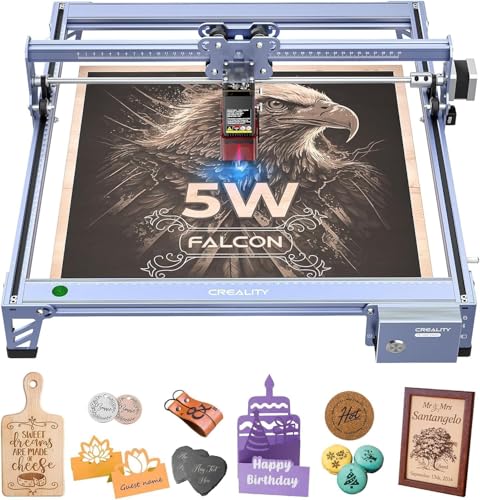
The Creality Falcon 5W offers a 0.06×0.06mm ultra-fine spot with a claimed 0.004 inch engraving accuracy. It supports large-scale engraving with a 400×415 mm working area and up to 10,000 mm/min engraving speed. The machine emphasizes safety and health features, including an anti-UV filter in the cutting laser module to protect eyes and nearby users while cutting on wood, leather, glass, and other materials.
Longer Ray5 10000mW Engraver
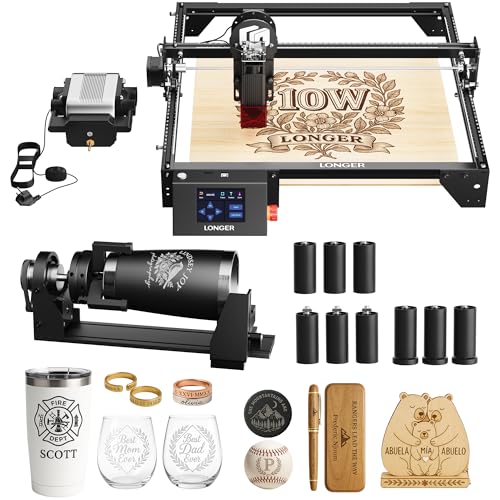
The Longer Ray5 10000mW model combines a powerful laser with a 400×400 mm working area and an ESP32-based processor, enabling multi-task control and faster processing. Its dual-beam technology and a 0.06 mm spot size deliver high-precision engraving on glass, metal, wood, and more. The kit includes an air pump, rotary attachment, and 12 risers to support larger or cylindrical items.
Longer Ray5 5000mW Engraver

The Longer Ray5 5000mW version balances power and control, featuring a 0.08 × 0.08 mm spot and a 0.01 mm engraving accuracy. It provides broad software compatibility via LaserGRBL and LightBurn, with a 400×400 mm working area, WiFi, USB, TF card, and a 3.5-inch touchscreen for convenient offline operation. The included air pump helps reduce smoke and achieve cleaner cuts on a range of materials.
Buying Guide
Key considerations when selecting a glass-ready laser engraver:
- Power and material handling: Higher wattage enables deeper and faster engraving on glass and coated surfaces, but may generate more heat and require airflow management. Balance power with material thickness and desired finish.
- Working area: Determine the maximum size of glass or other items you plan to engrave. Larger beds enable fewer piece-turnovers but may increase footprint and cost.
- Precision and repeatability: Look for a laser with sub-0.02 mm repeatability for fine glass details. A stable Z-axis and precise focusing improve consistency across sessions.
- Software ecosystem: Native software or broad compatibility with popular programs (AcmerTool, LaserGRBL, LightBurn) affects workflow and future upgrades. Ease of use matters for beginners and pros alike.
- Cooling and safety: Glass engraving can generate heat; machines with integrated cooling or airflow kits help protect both the machine and your work. Eye protection and proper enclosure are important for safe operation.
- Portability versus stability: Portable units are convenient for on-site work but may sacrifice some stability and power. Larger machines suit consistent studio setups with higher throughput.
- Accessories: Accessories like rotary rollers and risers expand engraving options, especially for cylindrical glassware or thick items. Check included kits and upgrade paths.
- Noise and maintenance: Consider noise levels during operation and the ease of maintenance, such as replacing lenses, cleaning optics, and replacing the laser diode when needed.
In evaluating these five options, consider your typical project mix (glass-focused versus mixed-material), whether you need portability, and how important rapid throughput is for you. All five models offer glass-appropriate capabilities, strong software support, and robust construction suitable for hobbyists and small businesses.