Choosing the right flexible filament or resin can dramatically change the feel and resilience of your prints. This guide highlights top flexible 3D printing materials suitable for American hobbyists and professionals, focusing on hardness, elasticity, print reliability, and surface quality. From TPU filaments to flexible resins, the selections below balance softness with strength to help you craft flexible components, wearable items, and bendable prototypes with confidence.
| Product | Brand | Material Type | Key Benefit |
|---|---|---|---|
| YOUSU Silk TPU Filament 1.75mm | Yousu | TPU 95A | Shiny silk surface and strong elasticity |
| Creality TPU Filament 1.75 | Creality | TPU 95A | High resilience with good gloss and wear resistance |
| SUNLU Flexible 3D Printer Resin | SUNLU | 66A flexible resin | Balanced softness and strength, fast curing |
| ZIRO TPU Filament 1.75mm | ZIRO | TPU 95A | Colorful, fast color-change capability |
| OVERTURE TPU Filament 1.75mm | OVERTURE | TPU 95A | Low clog, bubble-free performance with 24-hour drying |
Overview: The selections below emphasize flexible materials that print well on most FDM printers or standard resin systems, offering a mix of color, hardness, and ease of use. Whether you’re prototyping flexible grips, wearable parts, or soft mechanical components, these options provide reliable results with varying degrees of elasticity and surface finish.
YOUSU Silk TPU Filament 1.75mm

YOUSU Silk TPU filament offers a shiny, silk-like surface that doesn’t require post-polishing. It has a Shore hardness of 95A, balancing softness with elasticity for flexible applications such as handbags, coin purses, and fashion accessories. The filament is fully compatible with most 1.75mm FDM printers and printing pens, promoting good layer adhesion and a smooth finish with minimal warping. YOUSU also provides 3D printing support resources to assist users with setup and troubleshooting.
Creality TPU Filament 1.75

Creality TPU Filament 1.75, 95A, is designed for high resilience and glossy finishes. It delivers strong interlayer bonding for stability and a smooth surface, with good wear and aging resistance. Its UV and chemical resistance contribute to durability in demanding environments. The material is nontoxic and suitable for a range of flexible parts, including wearables and consumer gadgets, while maintaining reliable print quality across standard FDM setups.
SUNLU Flexible 3D Printer Resin

SUNLU Flexible 3D Printer Resin provides a practical balance of softness and strength, simulating rubber in flexible prototypes. With a 66A Shore hardness and high elongation at break, it delivers notable impact resistance, allowing prints to bend and flex without cracking. The resin is engineered for fast curing (405nm), enabling quicker production of flexible components while maintaining comparable performance to traditional flexible resins. It’s suitable for items requiring bendable durability such as grippers and seals.
ZIRO TPU Filament 1.75mm — Flex Opal

The ZIRO Flex Opal is a 95A TPU offering color-changing capability within a single spool. The fast color-change feature expands creative possibilities while maintaining printability with good ductility, low odor, and minimal warping. The filament is dried for 24 hours before vacuum sealing to reduce moisture-related issues. Its 1.75mm tolerance aims for stable extrusion and reliable prints across a range of 3D printers, making it a versatile option for colorful flexible parts.
ZIRO TPU Filament 1.75mm — Pink

ZIRO’s Pink TPU combines vivid color with 95A hardness, making it ideal for soft and flexible parts, tools, and accessories that require a practical aesthetic. The material emphasizes high print quality, with a focus on ductility, strength, and minimal odor. The 1.75mm filament accuracy is maintained through CCD diameter measurement, supporting stable extrusion and reliable results. Recommended printing temperatures align with common TPU settings to minimize issues such as warping and stringing.
3DMaterials Superflex 3D Printer Resin
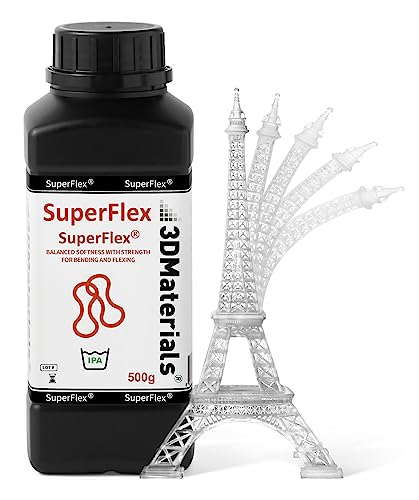
SuperFlex 3D Printer Resin provides a flexible 80A Shore hardness with a rubber-like feel, produced in Korea by 3DMaterials. It supports fast printing with monochrome LCD technology, enabling thin layers and reduced print times. The resin combines softness with strength to replicate flexible rubber-like parts and prototypes. It’s suitable for components that must bend, compress, or stretch while remaining durable, such as seals, gaskets, and soft-elastic prototypes.
FLASHFORGE PLA Flexible 1.75 mm
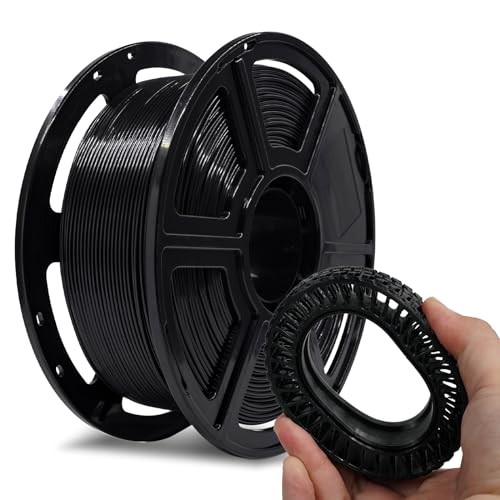
FLASHFORGE Flexible PLA offers four times the stretch of typical flexible filaments, making it highly suitable for soft accessories, insoles, and DIY projects that require significant elongation. It’s beginner-friendly and compatible with both Bowden and direct-drive extruders, though Bowden systems may need adjustments. The filament is dried before packaging and vacuum-sealed to minimize moisture-related defects, ensuring smooth extrusion and fewer bubbles during printing.
OVERTURE TPU Filament 1.75mm

OVERTURE TPU Filament is a 95A hardness flexible filament designed for reliability and performance. It emphasizes excellent layer adhesion and a smooth finish, with a patented clog-free formula to minimize printing issues. Each spool undergoes 24 hours of drying and is vacuum-sealed, contributing to reduced moisture-related defects. A recommended storage approach includes sealing with desiccants and maintaining dry conditions to optimize long-term performance and print consistency.
Buying Guide: Key Considerations for Flexible 3D Printing Materials
- Material type: Decide between TPU filaments and flexible resins. Filaments suit FDM printers, while resins are used with SLA/DLP systems and can offer higher detail in flexible parts.
- Shore hardness: 80A–95A TPU ranges provide different balances of softness and resilience. Softer materials bend more but may tear under stress; harder ones hold shape better but feel stiffer.
- Printability: Look for low warp, good layer adhesion, and minimal clogging. Some brands mention dried packaging to reduce moisture-related issues in TPU.
- Color and finish: Silky or glossy surfaces can enhance aesthetics. Color-changing options add creative flexibility but may require more precise temperature and cooling control.
- Printer compatibility: Ensure your printer supports 1.75mm filament and can handle flexible materials. Resin-based flexible options require compatible printers and exposure settings.
- Storage and handling: Store TPU away from moisture. For hygroscopic resins, keep containers sealed and use appropriate post-processing steps to achieve best results.
- Post-processing: Some finishes benefit from polishing or curing. Evaluate if post-processing aligns with your project needs.
- Safety and compatibility: Check for any odor, chemical resistance, or environmental considerations for your use case and workspace.
In summary, the materials listed offer a spectrum of flexibility and performance, from glossy TPU filaments to fast-curing flexible resins. When selecting a material, consider the application’s required softness, durability, printability on your setup, and desired finish to achieve reliable, repeatable results.