Choosing the right audio interface can transform your guitar recordings from muddy to studio‑quality. This guide highlights five top options that balance performance, portability, and value for American home studios. Each entry covers key features, ideal use cases, and what to consider when upgrading from entry level gear.
Summary of chosen products:
- Focusrite Scarlett Solo 3rd Gen — Bright pre-amps, 24-bit/192kHz, two instrument inputs.
- Focusrite Scarlett Solo 4th Gen — Enhanced Air mode, high dynamic range, professional converters.
- IK Multimedia iRig USB Guitar Interface — Ultra‑compact, universal compatibility, direct monitoring.
- M-Audio M‑Track Solo — Simple USB interface with XLR/Instrument combo, solid monitoring options.
- MAONO PS22 Lite — 24-bit/192kHz, robust mic/instrument routing, podcast-friendly features.
Focusrite Scarlett Solo 3rd Gen USB Audio Interface
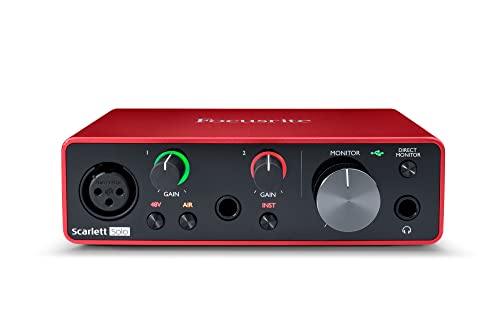
The Scarlett Solo 3rd Gen is built for guitarists seeking studio‑quality sound with simple operation. Its dual-purpose mic pre‑amps offer clear detail, while Gain Halos help you avoid clipping during guitar and vocal takes. An Air mode switch adds brightness and presence to acoustic instruments, making it easier to sit in a mix. With two high‑headroom instrument inputs, players can plug in guitars or basses and capture dynamic performances. The interface records at up to 24‑bit/192 kHz, preserving tonal nuances during tracking and mixing.
Best suited for solo performers or small project studios, this model emphasizes warm, transparent conversion and reliable performance for everyday guitar recording, practice, and podcasting. Setup is straightforward: connect your guitar and microphone, select Air if needed, and monitor with minimal latency. The compact design travels well for on‑the‑go sessions, and the included software bundle helps you start creating right away.
Focusrite Scarlett Solo 4th Gen USB Audio Interface

The Scarlett Solo 4th Gen advances the established Scarlett family with improved converters and a larger dynamic range, delivering studio‑quality sound for guitar, vocals, and podcasts. Its Air mode remains a key feature, lifting vocals and guitars in the mix with added presence and harmonic drive. The interface preserves Focusrite’s signature sonic clarity, making it a solid choice for people who want a practical, high‑fidelity recording path. It’s compatible with mainstream DAWs and provides reliable latency performance for real‑time monitoring.
Ideal for musicians who want a “professional in a box” experience, the 4th Gen variant emphasizes ultra‑clear capture and an enhanced tonal character. The simple input layout pairs well with single‑instrument recording setups, voiceover work, or streaming podcasts. Its robust build and familiar software support make it a strong long‑term investment for users who may expand to additional guitar and vocal parts over time.
IK Multimedia iRig USB Guitar Audio Interface

The iRig USB Guitar Interface focuses on portability without sacrificing core guitar interface features. It delivers 24‑bit/48 kHz sound with a dedicated guitar input and direct monitoring for silent practice. It includes a USB connection that works with Mac, PC, iPad, and modern iPhones, making it a flexible option for on‑the‑go recording and quick demos. The 1/4″ output can connect to an amp, enabling live rig integration, while the 1/8″ headphone out provides private listening during practice sessions.
With plug‑and‑play simplicity, the iRig USB is ideal for travelers, students, or hobbyists who want reliable, easy access to digital recording workflows. It’s particularly useful for capturing ideas quickly or for guitarists who need a compact device that travels with their guitar rig without compromising fundamental recording quality.
M‑Audio M‑Track Solo USB Audio Interface
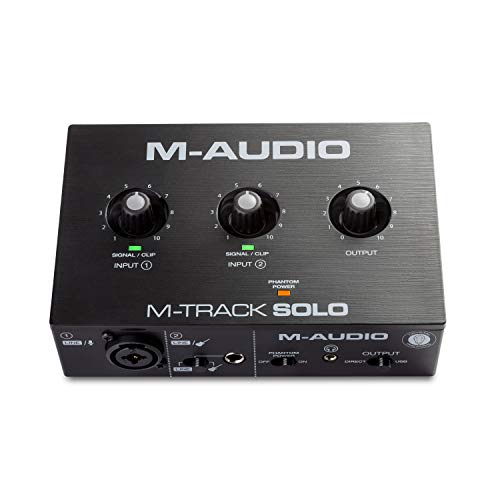
The M‑Track Solo provides a straightforward path to recording and streaming with a single XLR/Line combo input and a dedicated instrument input. It emphasizes ease of use and reliable monitoring, including a 1/8” headphone output and stereo RCA outputs for flexible monitoring setups. Its 48 kHz resolution offers solid, clean sound for demos, practice, or podcasting. A USB/Direct switch helps achieve near‑zero latency monitoring, which can be crucial for performers tracking multiple parts or overdubs in real time.
This interface is well‑matched for beginners expanding into home recording, as well as hobbyists who want a dependable, budget‑friendly option without compromising core features needed for guitar and voice recording. The compact form factor makes it convenient to carry between practice spaces or small home studios.
MAONO USB Audio Interface PS22 Lite

The MAONO PS22 Lite targets creators who want a capable feature set in a compact package. It records at 24‑bit/192 kHz with a dynamic range of 106 dB, delivering clear, accurate sound for guitar, podcasts, and music production. It supports microphone and instrument inputs with phantom power for condenser mics, making it versatile for studio voices and guitar tracks alike. The device complements streaming and home recording workflows with a straightforward ASIO compatibility and a robust driver setup for smooth operation with major DAWs.
For players who frequently switch between guitar and spoken word tasks, this interface provides a balanced blend of sound quality, ease of use, and portability. It’s suitable for home studios, student projects, and content creators who need reliable performance without a heavy hardware footprint.
Buying Guide: Key Purchase Considerations
When choosing an electric guitar audio interface, consider these factors to align with your goals and setup:
- Conversion quality and headroom: Higher bit depth and sample rates yield clearer, more spacious recordings. Look for 24‑bit/192 kHz if you plan to mix or master professionally.
- Preamp quality and input options: If you primarily record guitar, ensure robust instrument inputs and plenty of gain without distortion. For vocals, a good mic pre‑amp and phantom power options help with condensers.
- Latency and monitoring: Zero‑latency or low‑latency monitoring is essential for real‑time tracking. USB/Direct monitoring switches simplify the monitoring path.
- Portability vs. desktop setup: If you travel or perform live demos, compact interfaces with bus power and lightweight design are beneficial.
- Software bundle and DAW compatibility: Some interfaces include useful software suites. Confirm compatibility with your preferred DAW and operating system.
- Future expansion: If you expect to add more channels or multiple instruments/vocals, consider interfaces with additional inputs or compatibility with expansion mixers.
Compare practical needs with the features listed for each option. For solo guitarists, the combination of simple inputs, good preamps, and solid conversion often delivers the best value. For podcasters and content creators, monitoring options, phantom power, and bundled software can influence the long‑term workflow. Assess build quality, warranty, and customer support as part of your final decision to ensure reliable performance in everyday use.