The rise of Bluetooth-enabled DJ mixers makes wireless setup easier than ever. This guide highlights five reliable Bluetooth-enabled options that balance portability, sound quality, and practical features for hobbyists and mobile DJs alike. Each pick offers built-in USB/MP3 playback, solid mixer capabilities, and convenient wireless streaming to keep your performances seamless.
| Product | Brand | Key Bluetooth Feature | What It Excels At |
|---|---|---|---|
| Pyle PMXU83BT | Pyle | Bluetooth wireless streaming to the mixer | 8-channel versatility with USB/MP3 compatibility |
| Gemini MM1BT | Gemini Sound | Built-in Bluetooth input for wireless sources | Pocket-friendly 2-channel setup with solid EQ and crossfader |
| Pyle PMXU43BT | Pyle | Bluetooth wireless streaming to the console | 4-channel Bluetooth mixer with USB/MP3 compatibility |
| Gemini CDM-4000BT | Gemini Sound | Bluetooth streaming with dual CD/USB | Standalone all-in-one with media players and mixer |
| Pyle PA Speaker DJ Mixer Bundle (PPHP28AMX) | Pyle | Bluetooth audio streaming from mobile devices | 8-channel mixer bundled with two PA speakers for a complete setup |
Pyle PMXU83BT: 8-Channel Bluetooth Mixer

The PMXU83BT from Pyle combines 8 channels with USB/MP3 compatibility and 48V phantom power for condenser mics. It supports USB drives and Bluetooth streaming, allowing you to DJ from a connected computer or mobile device without cables. Each channel features a 3-band EQ and LED peak indicators to help you balance levels in real time. A compact yet capable solution for small venues, home studios, or mobile gigs, this mixer aligns with users who need flexible input options and wireless playback at a budget-friendly price.
Gemini MM1BT: 2-Channel Bluetooth Mini Mixer

The Gemini MM1BT emphasizes portability without sacrificing essential DJ features. This 2-channel mixer includes Bluetooth input for wireless streaming, plus RCA inputs and a 45mm crossfader for smooth transitions. Its compact design makes it ideal for mobile DJs, busking, or practice setups where space is limited. While geared toward beginners and travelers, it still provides reliable EQ and signal routing to two speaker outputs, making it a practical all-in-one on-the-go solution.
Pyle PMXU43BT: Compact Bluetooth 4-Channel Mixer
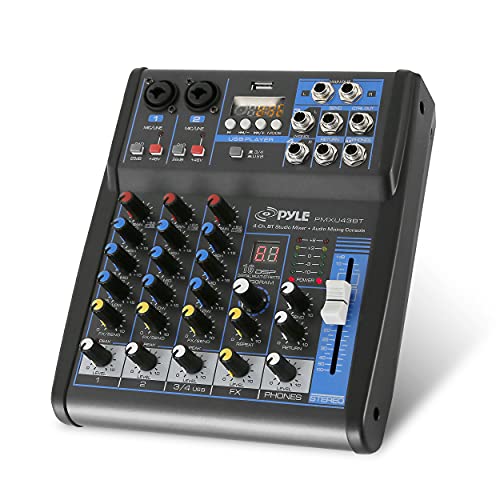
The PMXU43BT offers four channels with USB/MP3 compatibility and built-in Bluetooth streaming. It features XLR and 1/4″ inputs with phantom power, making it suitable for small ensembles or solo performances requiring reliable vocal mic support. The design emphasizes user-friendly control with a clear LED peak display and a 3-band EQ on each channel, delivering a straightforward setup for mid-sized rooms or intimate venues. It’s a balanced choice for DJs who want a compact, Bluetooth-enabled mixer without sacrificing feature depth.
Gemini CDM-4000BT: All-in-One Bluetooth DJ System

This standalone DJ controller is a complete all-in-one unit with dual CD/USB decks, Bluetooth streaming, and a built-in mixer. It’s designed for mobile DJs and small event spaces, eliminating the need for a laptop. The CDM-4000BT includes touch-sensitive jog wheels and a robust crossfader, plus a central mixer section with two-band EQ and gain control. Its 19-inch rack compatibility makes it a solid choice for portable setups that require dependable format versatility and direct media playback without software.
Pyle PA Speaker DJ Mixer Bundle: Bluetooth Ready

This bundle combines an 8-channel mixer with a pair of 300 W PA speakers and a complete setup for home or outdoor parties. Bluetooth streaming is built into the system, allowing wireless audio from phones, tablets, or other Bluetooth-enabled devices. The package includes a stand, cables, and a handheld microphone, offering a turnkey solution for events, small venues, or backyard gatherings. The integrated speakers help simplify logistics for DJs who prefer an all-in-one package with Bluetooth capability.
Buying Guide: Bluetooth DJ Mixer Considerations
When choosing a Bluetooth-enabled DJ mixer, consider how you will use it most often and what features will impact your workflow. Here are key purchase considerations and how different models compare across the core needs:
- Channel count and inputs: For beginners or intimate venues, 2–4 channels may suffice, but 6–8 channels offer more flexibility for vocal mics, instruments, and multiple sources. Check for XLR and line inputs, plus USB/MP3 playback options if you want deckless or laptop-free setups.
- Bluetooth reliability and latency: Look for mixers that advertise low-latency Bluetooth or aptX support to minimize drift between audio sources and your live mix. Consider whether you need Bluetooth streaming from a phone, tablet, or laptop, and whether you require playing from USB drives or SD cards.
- Audio processing and EQ: A good mixer should provide accurate metering, a clear master output, and per-channel EQ (ideally 3-band or more). A robust crossfader with adjustable curve is valuable for scratching or tight transitions.
- Phantom power and microphone support: If you plan to use condenser mics, phantom power is essential. Ensure there are at least one or two mic inputs with adequate gain, plus a talkover or low-cut filter for crowd control.
- Portability and setup: For mobile DJs, weight, size, and rack compatibility matter. Some units are standalone all-in-one systems (CD/USB/CDM-4000BT), while others require additional components (speakers, stands).
- Expansion and compatibility: If you already own speakers or a PA system, ensure the mixer provides compatible outputs (XLR, 1/4″ TS/ TRS). Some bundles offer ready-to-run packages with speakers included, which may simplify logistics.
- Budget and value: Compare the feature set relative to price. An 8-channel mixer with USB/MP3 and Bluetooth may provide better long-term versatility than a barebones 2-channel unit, especially for evolving performance needs.
- Durability and build quality: Metal chassis, sturdy knobs, and reliable faders translate to longevity in mobile or club settings. Check customer reviews for real-world feedback on wear over time.
Choosing the right Bluetooth DJ mixer involves balancing the number of channels, input types, and whether you prefer a standalone media player or a mixer designed to pair with existing gear. For beginners, a compact 2–4 channel with Bluetooth input and USB playback offers a smooth learning curve. For mobile and small venue work, a versatile 4–8 channel model with robust EQ, a reliable crossfader, and integrated Bluetooth streaming provides better long-term value.