Affordable vector network analyzers (VNAs) empower hobbyists, students, and electronics enthusiasts to measure S-parameters, SWR, and antenna performance without breaking the bank. This guide highlights five budget-friendly VNAs that balance capability and price, helping you choose a tool suitable for field testing, RF learning, and DIY projects. Each product includes a quick spec snapshot, so you can compare features at a glance before diving into detailed sections below.
| Product | Brand | Frequency Range | Key Benefit |
|---|---|---|---|
| [Upgraded] AURSINC NanoVNA-H V3.7 | AURSINC | 9 kHz – 1.5 GHz | Improved dynamics and USB-C connectivity |
| LiteVNA-64 | TZT | 50 kHz – 6.3 GHz | Faster scanning, wider range, user-friendly |
| SIGLENT SVA1015X | Siglent | 9 kHz – 1.5 GHz | Accurate spectrum and VNAs in one unit |
| Seesii LibreVNA 2.0 | Seesii | 100 kHz – 6 GHz | Full 2-port measurements with USB |
| SEESII NanoVNA-H (HW3.6) | Seesii | 10 kHz – 1.5 GHz | Portable with microSD data storage |
Note: All models discussed here provide foundational VNA capabilities suitable for amateur RF work, but feature sets vary. Review the included features to ensure the unit supports the frequency bands and measurement types you need.
[Upgraded] AURSINC NanoVNA-H V3.7 Overview
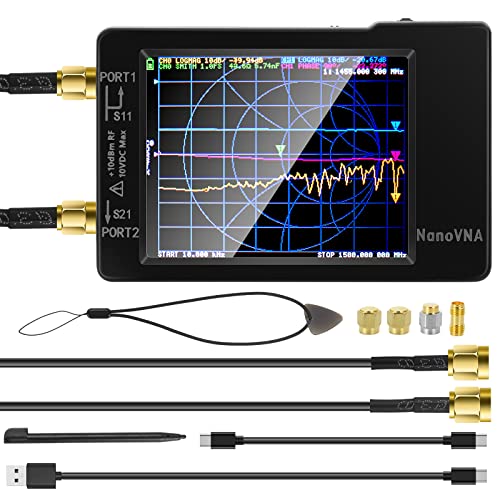
The AURSINC NanoVNA-H V3.7 expands on the classic NanoVNA by introducing a newer hardware version with a 2.8 inch display, Type-C connectivity, and a microSD port for saving data and screenshots. The device supports S11 and S21 measurements, enabling antenna performance evaluation with improved dynamic range across frequency bands up to 1.5 GHz. It also features a protective ABS case and enhanced battery management for field use. Users can generally rely on the improved frequency algorithm to capture harmonic extension, widening measurement capability for hobbyist RF projects.
LiteVNA-64 VNA Analyzer

The LiteVNA-64 emphasizes speed and ease of use, offering S11 and S21 measurements with an IFFT capable data path for TDR and DTF analyses. It supports a broader measurement range and faster scanning than some entry-level VNAs, with an interface designed to resemble NanoVNA workflows. This makes it a practical field tool for quick antenna checks, cable testing, and basic network analysis when portability matters as part of a kit or on-site work.
SIGLENT SVA1015X Spectrum Vector Analyzer

The SIGLENT SVA1015X blends spectrum analysis with vector network analysis capabilities across 9 kHz to 1.5 GHz. This model provides a compact, integrated instrument that supports VNA measurements alongside spectrum analysis, featuring low DANL (Displayed Average Noise Level) performance for sensitive measurements. Its versatility makes it suitable for bench testing, lab work, and mobile field assessments where both signal integrity and network parameters matter.
Seesii LibreVNA 2.0

The LibreVNA 2.0 is a full USB-based two-port VNA with an extended 100 kHz to 6 GHz range. It features a 6-layer PCB design to enhance port isolation and high-frequency matching, enabling S11, S21, S12, and S22 measurements. With dual ADC sampling and FPGA-based processing, it delivers high-speed multi-parameter sweeps suitable for complex RF work. This model is especially attractive for hobbyists seeking lab-grade-like capability at a lower cost.
SEESII NanoVNA-H (HW3.6)

The SEESII NanoVNA-H HW3.6 boosts frequency coverage to 1.5 GHz with a 2.8 inch display and internal storage options via microSD. The design emphasizes antenna analysis with a robust dynamic range across frequency bands. The firmware targets straightforward antenna testing, with an improved harmonic extension to broaden measurement reach. The compact form factor and data storage capabilities are practical for on-site diagnostics and field experimentation.
SEESII NanoVNA-H4 V4.4
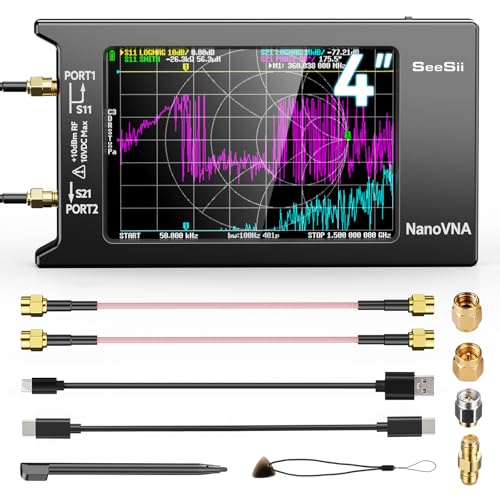
The SEESII NanoVNA-H4 represents a higher-end entry within the budget range, offering a 9 kHz to 1.5 GHz range, a 4.0 inch touchscreen, and a MicroSD data port for easy field data capture. The V4.4 version enhances dynamics and measurement stability, with a focus on practical S-parameter analysis, SWR, and impedance plotting. Its larger display and data storage options suit more demanding hobbyists or small workshop setups seeking expanded usability.
AURSINC Upgrated NanoVNA-H4 V4.4

The AURSINC NanoVNA-H4 upgrades to V4.4 with a 9 kHz to 1.5 GHz range, a 4.0 inch touchscreen, and a data-savvy workflow. It includes a built-in microSD port, time-stamping for saved data, and TDR capability in newer firmware builds. This model targets users who require field recording, precise S-parameter measurement, and quick cable testing within a compact footprint.
Buying Guide: Key Purchase Considerations
Choosing the right cheap VNA involves balancing frequency coverage, measurement capabilities, and form factor. Consider these factors when evaluating options:
- Frequency range and dynamic range: Higher end models extend to 1.5 GHz or more with better dynamic range. For basic antenna tuning and SWR checks, lower ranges can suffice.
- Port count and measurement types: Most entry VNAs offer S11, S21, and basic SWR. Some models add S12, S22, and full 2-port measurements; others offer passive TDR/DTF features via IFFT or dedicated options.
- Display and data handling: Larger touchscreens improve usability in the field. MicroSD storage or USB export helps save traces for later analysis.
- Connectivity and power: USB-C and battery options support portable operation. Ensure firmware updates are available to extend functionality over time.
- Software ecosystem and documentation: Clear manuals and active user communities help with setup, calibration, and interpreting results.
- Physical robustness: A protective case, shielding, and stable PCBs reduce noise and improve measurement repeatability in real environments.
- Port isolation and frequency performance: Higher-end boards with multi-layer PCBs often deliver better port isolation and stable measurements above several GHz.
For hobbyists, a balance of budget, ease of use, and practical measurement capabilities typically matters most. If your use cases include portable field tests or classroom demonstrations, prioritizing a compact unit with SD storage and straightforward software may yield the best overall value. If you require deeper lab-grade features, consider models that advertise full 2-port measurements and wider dynamic ranges, even at a modest price premium.