Choosing the right audio interface with preamps can elevate vocals, guitars, and podcasts to professional levels. This article highlights five top options, each offering quality mic preamps, solid conversion, and reliable performance for home studios, streaming, and on-the-go recording. Read on to compare features, connectivity, and overall value to help you pick a model that fits your workflow and budget.
| Product | Brand | Key Benefit |
|---|---|---|
| Focusrite Scarlett Solo 3rd Gen | Focusrite | Bright preamps, Air mode, 24-bit/192kHz |
| Focusrite Scarlett Solo 4th Gen | Focusrite | Enhanced dynamic range, Air mode, studio-grade converters |
| Focusrite Scarlett 2i2 4th Gen | Focusrite | Auto Gain, Clip Safe, broad input versatility |
| M-AUDIO M-Track Solo | M-AUDIO | Compact, versatile XLR/Line + DI, 48 kHz |
| CIXUN 2×2 USB-C | CIXUN | Driver-free, 24-bit/192kHz, compact workload |
Focusrite Scarlett Solo 3rd Gen Review
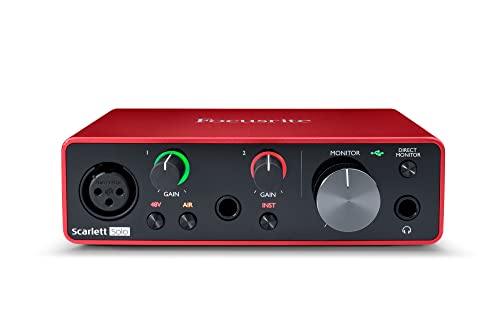
The Focusrite Scarlett Solo 3rd Gen delivers pro-level preamps with a bright, transparent character. The Air mode adds clarity to acoustic sources, helping vocals and guitar tracks sit in the mix with more presence. Two high-headroom instrument inputs handle guitar or bass cleanly, and Gain Halos visually show signal levels to prevent clipping. With 24-bit/192kHz converters, recordings preserve detail during tracking and mixing, making it a strong choice for solo players and podcasters who want studio sound in a compact interface.
Focusrite Scarlett Solo 4th Gen Review

The Scarlett Solo 4th Gen emphasizes studio-grade conversion with a wide 120dB dynamic range. The improved Air mode brings vocal and guitar parts forward in the mix, adding musical presence. This generation aims to deliver the same Focusrite reliability with enhanced acoustics for home studios, small project rooms, and on-the-go recording setups. It’s well-suited for solo artists who require a straightforward, high-fidelity workflow with robust software integration.
Focusrite Scarlett 2i2 4th Gen Review

The 2i2 4th Gen expands inputs and features for a broader setup, including Auto Gain for mic and guitar to help ensure consistent levels. Clip Safe prevents unexpected distortion, enabling hands-off recording sessions. With the same renowned Focusrite preamps and 120dB dynamic range, it’s a practical choice for musicians who need a versatile 2-in, 2-out interface with solid monitoring and software bundle support.
M-AUDIO M-Track Solo Review
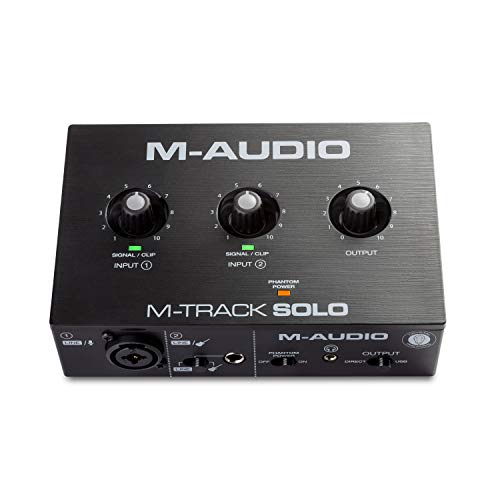
The M-AUDIO M-Track Solo offers a compact, portable solution with XLR/Line input and DI coverage. It records at 48 kHz, which remains adequate for podcasts, streaming, and entry-level music projects. The interface includes a direct monitoring path for zero-latency listening and both headphone and main outputs for flexible monitoring. It’s a no-frills option that emphasizes ease of use and reliable basic performance.
CIXUN 2×2 USB-C Review

The CIXUN 2×2 USB-C interface emphasizes a driver-free setup with 24-bit/192kHz studio-grade sound. It provides dual XLR/TRS inputs and phantom power, making it versatile for vocals, guitars, and other line-level sources. The compact metal shell is designed for durability in portable workflows, and the front-panel controls simplify gain management and monitoring. It targets users who want a straightforward, reliable, compact interface with high-resolution audio capabilities.
Buying Guide: Key Purchase Considerations
- Input and output options: Decide how many mics, guitars, and devices you need to connect. If you plan to record a vocalist and a guitar simultaneously, a 2-in/2-out model is usually sufficient; for solo work, a 1-in/2-out or 2-in/2-out can be ideal depending on future needs.
- Preamps and gain structure: Look for low-noise mic preamps with enough headroom. Features like Gain Halos or Auto Gain help manage levels during recording. Consider whether Air or similar processing in preamps improves your preferred vocal and instrument tone.
- Conversion quality: 24-bit/192kHz is standard for higher-fidelity work. A wider dynamic range (often 110–120 dB) translates to clearer, more detailed recordings, especially with dynamic or condenser mics.
- Monitoring options: Zero-latency direct monitoring is valuable for performers. Check headphone vs. main output levels and whether there’s a dedicated monitor control or mix control for comfortable playback.
- Software bundle and compatibility: Some interfaces include DAWs, plugins, or guitar amp sims. Ensure compatibility with your computer (USB-C, USB-A) and your operating system, plus any mobile device compatibility if you work on the go.
- Portability and build: If you travel or perform live sessions, a compact, durable chassis is helpful. Aluminum or metal housings often provide better durability for field use.
- Future-proofing: If you anticipate needing more inputs or additional features, consider scalable options like larger Focusrite racks or interfaces with expansion capabilities.
- Price-to-performance balance: Entry-level interfaces offer solid preamps and essential features, while mid-range models add higher dynamic range and improved converters. Align features with your recording goals and budget.
Across these options, the Focusrite Scarlett line emphasizes reliable preamps, clean converters, and user-friendly workflows, making it a strong baseline for many setups. M-Audio offers compact, budget-friendly choices with solid performance and included software. CIXUN provides a compact, driver-free option for straightforward recording. For podcasters and streamers, the combination of easy monitoring, connectivities, and software bundles often matters as much as the mic preamp quality.