Choosing an audio interface with multiple inputs helps you record more than one source at once, whether you’re tracking a band, recording a podcast with guests, or capturing instrument and vocal takes simultaneously. The following five interfaces offer reliable multi-input configurations, solid preamps, and broad compatibility with popular DAWs. Each entry highlights input types, driver quality, and standout features to help you compare options quickly.
| Product | Inputs / Preamps | Key Benefit |
|---|---|---|
| M-AUDIO AIR 192×14 | 8 inputs / 4 outputs, MIDI | Extensive I/O for complex setups |
| MAONO E2 Gen2 Podcast Bundle | 2 XLR combo inputs | All-in-one podcasting solution |
| M-AUDIO M-Track Duo | 2 combo XLR/Line inputs | Flexible, compact multi-input option |
| M-AUDIO M-Track Duo HD | 2 XLR/TRS inputs | High-resolution recording with USB-C |
| CIXUN 2×2 USB-C | 2 inputs (XLR/Line) + Hi-Z | Portable dual-input workhorse |
MAUDIO AIR 192×14 USB-C Audio Interface
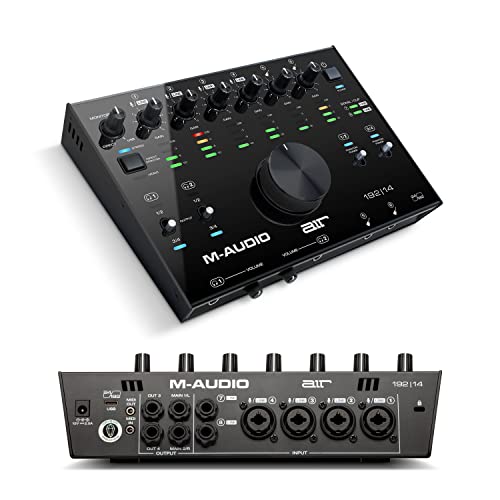
The MAUDIO AIR 192×14 delivers a sizable input count and versatile connectivity for studio recording, streaming, and project production. It supports up to 24-bit/192kHz resolution for clear capture and playback, helping users preserve detail across complex sessions. The interface includes 8 inputs and 4 outputs plus MIDI, enabling multi-instrument setups and the integration of external controllers or synths. With low-latency monitoring and a robust USB-C connection, this model is suited for busy home studios that require simultaneous tracking of multiple sources.
MAONO Podcast Equipment Bundle: E2 Gen2

The MAONO E2 Gen2 bundle is designed for podcasting and streaming with two XLR combo inputs and a high-quality preamp stage offering up to 60dB of gain. This all-in-one solution simplifies setup for co-hosts and guests while maintaining clean, broadcast-ready sound. USB-C connectivity ensures broad compatibility with laptops, desktops, and mobile devices. In addition, the E2 Gen2 includes eight customizable sound effects, enabling quick on-air enhancements and audience engagement between takes or segments. Noise reduction features help minimize common room noises during recording.
M-AUDIO M-Track Duo USB Audio Interface
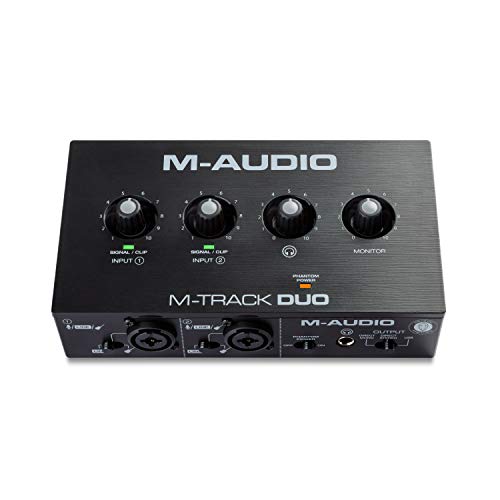
The M-Track Duo offers two combo XLR/Line inputs, making it an adaptable choice for recording guitars, vocals, and line-level sources simultaneously. It supports 48 kHz recording, which is sufficient for most home studio applications, and provides flexible monitoring options with a dedicated headphone output and stereo main outputs. The USB/Direct switch enables zero-latency monitoring, helping performers stay in time with their performances without hearing a delay in the headphone mix.
M-AUDIO M-Track Duo HD USB-C Interface
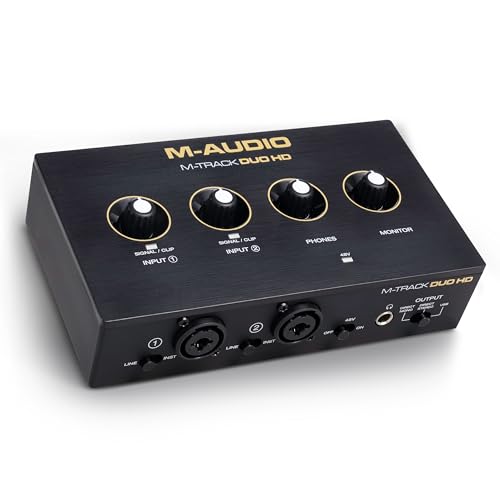
The M-Track Duo HD expands on the Duo with enhanced 24-bit/192kHz resolution and USB-C connectivity, suitable for higher-fidelity project work or streaming. It provides two XLR/TRS inputs for mic, instrument, or line-level sources and supports flexible routing with independent output controls and a dedicated headphone output. Its build and performance target home studios seeking higher-quality capture with minimal latency.
CIXUN 2×2 USB-C Audio Interface

The CIXUN 2×2 USB-C interface provides two front-panel inputs with Hi-Z support and phantom power for condenser mics, plus a sturdy matte metal chassis. It’s designed for straightforward setup without drivers, offering 24-bit/192kHz recording quality. The front-panel gain controls, low-cut filter, and monitor loopback features help tailor the recording workflow for podcasts, streaming, or song production, making it a practical option for travelers and small studios alike.
Buying Guide: Key Factors For Multi-Input Interfaces
When evaluating audio interfaces with multiple inputs, consider these dimensions to select the best fit for your workflow:
- Input Count and Type: Determine the number of mic/line inputs you need, and whether you require XLR, 1/4″ TRS, or instrument-level connections. Some models add Hi-Z guitar/bass inputs and phantom power for condenser mics.
- Converter Quality: Look for 24-bit/192kHz specs for high-resolution recording, especially if you plan to mix and master with detailed material.
- Preamp Performance: High-headroom preamps reduce clipping and preserve dynamics. Air or bright modes can alter harmonic content for vocals and acoustic guitars.
- Monitoring Features: Zero-latency monitoring via USB/Direct switches, headphone outputs with independent level control, and adjustable monitor mixes ease tracking sessions.
- Connectivity: USB-C interfaces generally offer broader compatibility with modern computers and devices. Ensure driver support for your OS and DAW.
- Software Bundle: Some interfaces ship with DAW licenses, virtual instruments, or monitoring tools that add value for beginners and seasoned producers alike.
- Portability vs. Desktop Use: Compact two-input models are ideal for on-the-go recording, while higher I/O configurations suit fixed home studios.
- Durability and Build: A metal chassis and sturdy gain knobs improve longevity in busy environments or travel.
For multi-source recording scenarios, prioritize interfaces that offer at least two balanced inputs, flexible monitoring, and reliable drivers. If you anticipate streaming or podcasting, features like onboard effects or a robust software bundle can streamline production. Consider future expansion needs—some models allow additional outs or loopback features to integrate with a larger rig.