Whether you’re recording drums, podcasts, or multi-track projects, an 8-input audio interface can streamline your workflow by giving you enough mic preamps and line inputs in one box. The following picks are popular choices that balance preamp quality, latency, and expandability. This guide highlights each device’s strengths, so you can compare how they fit your recording setup and budget.
| Product | Brand | Inputs | Key Benefit |
|---|---|---|---|
| Tascam US-16×08 | Tascam | 8 mic/line + 8 line | High headroom preamps and solid AD/DA |
| Behringer ADA8200 | Behringer | 8 In / 8 Out ADAT | Cost-effective ADAT extension |
| Behringer UMC1820 | Behringer | 18 In / 20 Out USB | Expandable with ADAT, versatile routing |
| Pyle PMXU83BT | Pyle | 8 channel mixer/interface combo | Integrated Bluetooth and USB interface |
| Behringer FLOW 8 | Behringer | 8 digital mixer channels | Remote control and built-in effects |
Tascam US-16×08 Rackmount USB Interface

The Tascam US-16×08 delivers eight Ultra-HDDA microphone preamps and eight additional line inputs, with up to 56 dB of gain on the mic stage. This rackmount interface is designed for multi-mic recording sessions, such as drums or small ensembles. It supports simultaneous mic and line capture to a computer, and its eight line inputs offer switchable instrument levels for direct guitar or bass input. The overall routing and monitoring are straightforward, making it a practical choice for project studios needing robust, clean sound in a compact 1U rack form factor.
Behringer UMC1820 Audiophile 18×20 USB Interface

The Behringer UMC1820 offers a broader input matrix with 18 inputs and 20 outputs, including ADAT I/O for expanding your rack. It features Midas-quality mic preamps and 24-bit/96 kHz resolution, which yields cleaner, more detailed recordings. Compatible with major DAWs and software suites, this interface is suitable for larger session setups where you might route several mics simultaneously and need flexible mix options without breaking the bank.
M-AUDIO AIR 192×4 USB-C Audio Interface
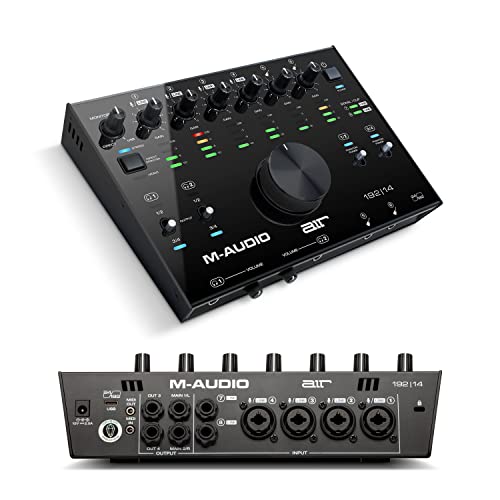
Note: This model provides 4 inputs and is included here to contrast 8-input options with a focus on portability and high-quality 24-bit/192 kHz capture. While it’s not an 8-channel device, its premium preamps and low-latency monitoring make it a strong compact option when you don’t need eight simultaneous inputs. It demonstrates how smaller interfaces can complement an 8-input system by serving as a dedicated secondary interface or USB hub for peripherals.
Pyle PMXU83BT 8-Channel USB Mixer Interface

The Pyle PMXU83BT combines an 8-channel digital mixer with USB audio interface capability and Bluetooth streaming. It supports XLR and unbalanced 1/4″ inputs with phantom power, making it a flexible option for project studios needing quick setup for vocal, guitar, or keyboard inputs. Built-in EQ and DSP features offer convenient tonal shaping, while the USB path simplifies direct recording and monitoring for podcasters and live-streamers.
Behringer FLOW 8 Digital Mixer

The Flow 8 is a compact 8-channel digital mixer with Bluetooth audio, app-based control, and USB/Audio Interface capabilities. It provides a modern workflow for streaming and recording, with 60 mm faders and a dedicated master control. While primarily a mixer, its built-in USB interface and remote control options help wire up quick, integrated setups where you want to route multiple inputs to a computer without separate hardware routing complexities.
Buying Guide: Key Purchase Considerations
- Input count and type: If you routinely record drums, ensembles, or several vocal tracks at once, prioritize 8 or more mic/line inputs with individual preamps. Consider whether you need instrument DMAs or direct guitar/bass inputs for direct recording.
- Preamp quality and headroom: Look for interfaces with clean preamps and sufficient gain (often up to 56 dB or more) to avoid noisy recordings at higher gain settings. Preamps influence the perceived clarity of your tracks, especially with dynamic mics.
- ADAT expandability: If you anticipate growth, ADAT I/O can be a cost-effective way to add channels later. The ADA8200 and Behringer UMC1820 exemplify expandability options.
- Latency and driver stability: Low round-trip latency is essential for real-time monitoring. Check for drivers and compatibility with your DAW and operating system to minimize crackles and dropouts.
- DAW compatibility and bundled software: Some interfaces come with lite software packs (Ableton Live Lite, MPC Beats, etc.). Consider your software ecosystem and whether additional bundled tools add value.
- Form factor and noise considerations: Rackmount or desktop units affect space and heat. Rackmount devices suit compact studios that need a clean rack setup, while desktop units offer quick access during creative sessions.
- Integrated features vs. dedicated interface: Some models combine mixers and interfaces (Flow 8, PMXU83BT), which can simplify workflows but may trade off some adjustable routing flexibility found in standalone interfaces.
- Price-to-performance balance: For eight inputs, evaluate total cost, future expandability, and the quality of preamps and converters. The ADA8200 and UMC1820 often appeal to budgets-conscious buyers seeking ADAT expandability.
- Future-proofing: Consider whether USB-C connectivity or compatibility with newer USB standards is important for your setup, especially for Mac and Windows users using modern laptops or desktops.
In summary, the best choice depends on your workflow: maximal expandability with ADAT, compact rack-friendly setups, or an all-in-one mixer/interface for quick setups and streaming. Each option listed here provides a viable path to reliable 8-input recording, with different strengths in routing, software, and expandability.