The 9-inch form factor hits a sweet spot for boaters who want a large, readable display without overwhelming space. This guide highlights five top 9-inch fish finders and related viewing options, focusing on sonar clarity, map availability, and expandability. You’ll find models with Mega Imaging, Active Imaging, built-in maps, and robust networking, plus a versatile underwater camera option for viewing beneath the waterline. Each entry includes practical strengths to help you compare performance, ease of use, and ecosystem compatibility for American salt and freshwater lakes and rivers.
Product Quick Reference
| Product | Brand | Key Strengths | Link |
|---|---|---|---|
| XPLORE 9 GPS Fish Finder | Humminbird | MEGA Side Imaging+, 200 ft range per side; GPS basemap; AutoChart Live | View |
| Elite FS 9 with Active Imaging 3-in-1 | Lowrance | CHIRP, SideScan, DownScan; FishReveal; Active Imaging HD | View |
| Elite FS 9 (No Transducer) | Lowrance | Active Imaging 3-in-1 support; ActiveTarget Ready; full networking | View |
| NSS9 evo3S | Simrad | Powerful 9-inch display; built-in GPS; preloaded C-MAP US Enhanced | View |
| Eyoyo 9″ Underwater Camera Kit | Eyoyo | 9″ monitor; 12 IR LEDs; up to 6-8 hours battery | View |
Notes: This collection reflects 9-inch display options, prioritizing versatil ity and performance for American waters. Each product is selected for its balance of imaging depth, mapping, and expandability. The Eyoyo camera options provide a different kind of fishing insight by viewing underwater environments directly.
Humminbird XPLORE 9 GPS Fish Finder

The Humminbird XPLORE 9 delivers premium sonar technology for detailed offshore and inland fishing. MEGA Side Imaging+ provides up to 200 feet of coverage on each side, while MEGA Down Imaging+ reaches down to 200 feet. Dual Spectrum CHIRP has wide and narrow modes to separate fish from structure more clearly. Built-in GPS with Humminbird Basemap covers more than 10,000 lakes, with LakeMaster and CoastMaster VX map cards available for US and Canada. Real-time mapping via AutoChart Live creates depth contours, bottom hardness, and vegetation maps as you boat. Eight hours of built-in recording helps capture trolling runs and memorable catches. This unit is also compatible with AutoChart Zero Line SD cards for clean map baselining.
Strengths include expansive imaging clarity, expansive mapping options, and on-water data capture. Potential considerations are the need for compatible transducers and map card selection to unlock full regional detail. Users should verify lake coverage in their operating region and ensure updates are current for best results.
Lowrance Elite FS 9 with Active Imaging 3-in-1
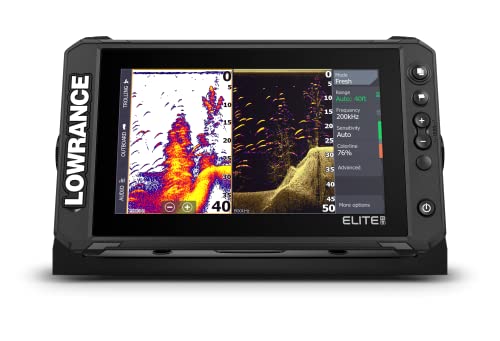
Lowrance’s Elite FS 9 with Active Imaging 3-in-1 offers CHIRP, SideScan, and DownScan plus FishReveal for clearer target separation. The system supports High-Definition Active Imaging when paired with the S3100 module and is ready for ActiveTarget Live Sonar. Networking capabilities include wireless, NMEA 2000, and Ethernet, allowing integration with Halo Dome Radar, Outboard Pilot, and multi-display setups for sharing sonar, charts, and waypoints among displays. This configuration emphasizes a scalable fishing system built for complex boat layouts and multi-angler use.
Considerations include the need for additional modules to access the complete Active Imaging HD features and potential expansion hardware for full network functionality. Compatibility with existing nav gear and screen brightness for various lighting conditions are practical points for buyers to review.
Lowrance Elite FS 9 (No Transducer)
This variant focuses on networking and screen technology, retaining the Active Imaging 3-in-1 concept but without a bundled transducer. It suits buyers who already own compatible transducers or who prefer to customize their sonar setup. The unit supports CHIRP, SideScan, and DownScan with FishReveal, and remains ACTIVETARGET READY for high-resolution live imagery when paired with compatible gear. Full networking enables data sharing across displays, peripheral devices, and networked accessories. The configuration is ideal for anglers who want a modular approach to sonar and charting ecosystem expansion.
Key considerations include ensuring you have or plan to acquire the appropriate transducer and evaluation of how much network hardware is desired for your boat. If you need a ready-to-go solution, the transducer-included option might be simpler to deploy on day one.
Simrad NSS9 evo3S – 9-Inch Chartplotter

The Simrad NSS9 evo3S pairs high-definition processing with an integrated GPS and preloaded C-MAP US Enhanced inland and coastal charts. It’s designed to handle Active Imaging sonar, StructureScan 3D, HALO radar, and more, delivering advanced fish-finding performance alongside robust charting. The iMX 8 processor supports quick screen transitions and responsive navigation, making it a strong choice for anglers who need reliable speed and precise mapping on a single platform. This system emphasizes a powerful all-in-one navigation and sonar experience in a compact 9-inch package.
Considerations include evaluating the total cost of add-ons for advanced imaging and radar, plus compatibility with existing sensors and networking hardware. For users prioritizing a compact yet capable ecosystem, this model offers substantial value with Simrad’s ecosystem strength.
Eyoyo 9″ Underwater Camera Kit

This Eyoyo underwater fishing camera kit offers a 9-inch color monitor, 12 infrared LEDs, and a long cable for viewing beneath the water. The kit includes a rechargeable battery option delivering 6-8 hours of continuous operation, depending on usage. It is a practical complement for anglers seeking real-time underwater views, whether ice fishing or exploring structure around reefs and weed lines. The system’s DVR capability for recording footage adds a layer of utility for reviewing successful setups and patterns in future trips.
Considerations include the need to manage a separate display and video feed from a separate transducer or camera system. The Eyoyo camera is not a traditional sonar fish finder, but it provides a valuable supplementary perspective on underwater habitats and fish behavior.
Buying Guide: Key Purchase Considerations
- Display and readability: A 9-inch screen should offer clear contrast and sufficient brightness for bright days on the water. Look for high resolution, anti-glare coatings, and adjustable brightness.
- Sonar performance: Prioritize units with CHIRP, SideScan, and DownScan; consider models with Mega Imaging or Active Imaging for deeper or more detailed target separation. Ensure compatibility with the desired transducers and imaging modules.
- Mapping and charts: Decide between built-in basemaps, LakeMaster/CoastMaster, and compatibility with Navionics. Preloaded or easily upgradable maps help with navigation in unfamiliar waters.
- Networking and expandability: If you fish with multiple boats or want to share data, select models that support Ethernet, NMEA 2000, and wireless integration. Check compatibility with radar, autopilots, and other sensors.
- Transducer options: Some models come with transducers; others require you to purchase separately. Confirm transducer type (DUAL, 3-in-1, Active Imaging) and mounting compatibility (through-hull, transom, or trolling motor).
- Ease of use and interface: A responsive user interface and quick access to fish-finding modes, charts, and waypoint management matter for efficiency during trips.
- Durability and water exposure: Choose units designed for marine use with adequate sealing, vibration resistance, and weather tolerance for saltwater and freshwater environments.
- Budget and ecosystem: Consider the total cost of the display, required transducers, and potential add-ons. A single-brand ecosystem often yields the most cohesive experience, but cross-brand compatibility is common with modern networks.
- Support and updates: Look for ongoing firmware updates, map updates, and accessible customer support to maintain performance over time.
In evaluating these options, anglers should prioritize imaging clarity, map depth, and expansion potential while considering their boat setup, typical waters, and preferred brand ecosystem. The 9-inch format balances visibility with installation flexibility across many fishing craft.