The best 5.1 channel surround sound system depends on your room, connection needs, and preference for separate speakers or a soundbar. The Logitech Z906 is best for buyers seeking a THX-certified speaker system, while the ULTIMEA Poseidon D50 suits people who want rear speakers and app control. Hisense offers a soundbar setup with a wireless subwoofer, Amazon Fire TV Soundbar Plus emphasizes dialogue and immersive formats, and Bobtot provides 5.1/2.1 modes with a large subwoofer.
| System | Best for | Notable features |
|---|---|---|
| Logitech Z906 | Separate-speaker home theater | THX, Dolby Digital, and DTS support |
| ULTIMEA Poseidon D50 | Flexible rear-speaker placement | Wired rear speakers, wireless subwoofer, app control |
| Hisense HS5100 | Soundbar simplicity | 5.1 channels, HDMI ARC, wireless subwoofer |
| Amazon Fire TV Soundbar Plus | Clear dialogue and cinematic formats | Dolby Atmos, DTS:X, center dialogue channel |
| Bobtot Home Theater System | Switchable 5.1/2.1 playback | 10-inch subwoofer, Bluetooth, multiple inputs |
Logitech Z906: Best For Separate Speakers
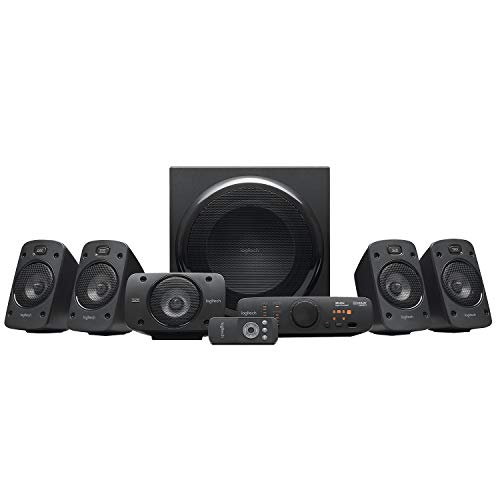
The Logitech Z906 is a 5.1 speaker system with four satellite speakers, a subwoofer, and support for Dolby Digital and DTS soundtracks. Its listed features include THX certification, wall-mountable satellites, and 500 watts of continuous power, with peak output stated as up to 1,000 watts under certain circumstances.
Best for: Buyers who want a traditional multi-speaker setup and value the listed THX and format support. It was selected for its explicit 5.1 design and compatibility with common surround sound formats. The satellites can be wall mounted, which may help with placement. Limitation: It is not listed as waterproof, and separate satellites require more placement planning than a single soundbar.
ULTIMEA Poseidon D50: Best For Placement Flexibility

The ULTIMEA Poseidon D50 combines a soundbar, two wired rear speakers, and a wireless subwoofer. Its listed features include app control, adjustable surround speakers, SurroundX technology that upgrades 2.0 PCM to 5.1 surround sound, and a 19.6-foot cable for the rear speakers.
Best for: Viewers who want a soundbar-based system but still want separate rear speakers. It was selected for its stated 5.1 configuration, app control, and flexible rear-speaker cable length. The subwoofer’s BASSMX feature is described as enhancing low-frequency impact for movies and games. Limitation: The rear speakers are wired, so placement depends on routing their cable through the room.
Hisense HS5100: Best For A Complete Soundbar Setup

The Hisense HS5100 includes a front soundbar, rear surround speaker kit, and wireless subwoofer. Its listed features include Dolby Audio, DTS Virtual:X, HDMI ARC, Bluetooth 5.3, a remote control, and a 6.5-inch subwoofer. The product lists 540 watts as maximum audio power.
Best for: Buyers who want a 5.1 soundbar package with a wireless subwoofer and HDMI ARC. It was selected because it combines rear surround speakers with several stated connection and audio features. Limitation: The wireless connection is specified for the subwoofer; the product information does not state that the rear speakers are wireless.
Amazon Fire TV Soundbar Plus: Best For Dialogue

The Amazon Fire TV Soundbar Plus listing describes a 5.1-channel system with a subwoofer and surround speakers. It supports Dolby Atmos and DTS:X and includes a dedicated center dialogue channel designed to make conversations clearer.
Best for: People who prioritize intelligible speech alongside an immersive movie setup. It was selected for its stated center dialogue channel and support for Dolby Atmos and DTS:X. Limitation: The listing describes a system that includes surround speakers, but buyers should check the package details to confirm which components are included in the specific offer they choose.
Bobtot Home Theater: Best For 5.1 And 2.1 Modes
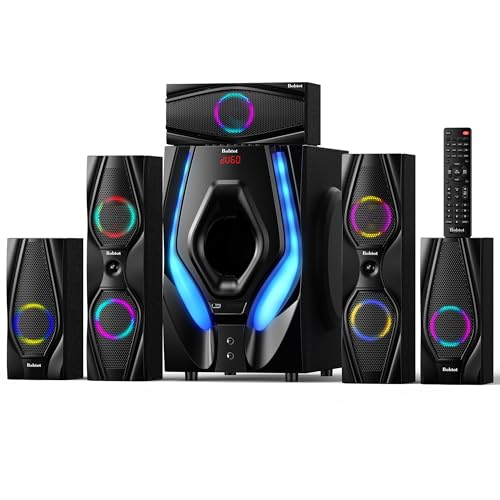
The Bobtot system offers selectable 5.1 and 2.1 channel modes, controlled by remote or the subwoofer’s front panel. Its listed features include a 10-inch subwoofer with built-in receiver, Bluetooth, ARC and optical inputs, USB, FM radio, and LED lighting. The 1,200-watt figure is identified as peak power.
Best for: Buyers who want channel-mode options and multiple listed input types. It was selected for its switchable setup and large subwoofer. Limitation: The 1,200-watt specification is peak power, not a stated continuous rating, so it should not be compared directly with continuous-power figures from other systems.
Buying Guide: How To Choose A 5.1 System
Do you want a soundbar or separate speakers?
A soundbar system can consolidate the front channels into one unit, while a system such as the Logitech Z906 uses separate satellites. Check the included components and speaker layout before choosing. Rear speakers can provide physical placement behind the listening area, but cable requirements may affect where they can go.
Which connections do you need?
Match the system’s listed inputs to your TV and other equipment. HDMI ARC appears on the Hisense and Bobtot listings; Bobtot also lists optical and Bluetooth. Do not assume a connection is included unless the product details specify it. Check whether your TV and source device support the audio formats you plan to use.
How should you compare power and bass?
Compare power figures carefully: maximum or peak output is not the same as continuous power. Subwoofer size alone does not establish how a system will sound in your room. Consider whether you need strong bass, dialogue emphasis, or a balance suitable for movies, gaming, and music.
Frequently Asked Questions
What does 5.1 channel surround sound mean?
It refers to five main audio channels and one low-frequency effects channel, commonly delivered through a subwoofer. The exact speaker arrangement depends on the system.
Does a 5.1 soundbar need rear speakers?
Some 5.1 soundbar packages include separate rear speakers, as stated for the ULTIMEA and Hisense systems. Check the specific package details because configurations vary.
Is a wireless subwoofer the same as wireless rear speakers?
No. A wireless subwoofer does not confirm that rear speakers are wireless. Check each component’s connection requirements.
What is the difference between Dolby Digital and Dolby Atmos?
They are different audio formats. Product listings identify which formats a system supports; confirm that your source content and connected devices also support the format you want.
Should I choose peak watts or continuous watts?
Use the rating type stated by the manufacturer. Peak and continuous power describe different measurements and are not directly interchangeable.