Finding a reliable 300Ah deep cycle battery can power RVs, boats, solar systems, and off-grid mini-homes. This guide highlights five top LiFePO4 options that balance capacity, durability, and safety. Each entry includes practical specs, a direct Amazon link, and a quick assessment to help you compare at a glance.
Summary table of selected products:
| Product | Brand | Capacity (Ah) | Key Benefit |
|---|---|---|---|
| ECIENWELL 12V 300Ah | ECIENWELL | 300 | Small, high energy density with strong lifespan |
| Power Queen 12V 300Ah | Power Queen | 300 | High usable energy, robust 200A BMS |
| VATRER POWER 12V 300Ah | VATRER POWER | 300 | Low temp protection, 5000+ cycles |
| LiTime 12V 300Ah | LiTime | 300 | EV-grade cells, scalable capacity |
| Rvpozwer 12V 300Ah | Rvpozwer | 300 | Expandable to large arrays, long cycle life |
ECIENWELL 12V 300Ah Lithium Battery

ECIENWELL’s upgraded 12VLiFePO4 battery brings 3840Wh of energy in a compact form. It weighs about 54.5 pounds and fits smaller spaces without sacrificing capacity. The 200A BMS protects against overcharge, over-discharge, over-current, and short circuits, while IP65 waterproofing enhances outdoor use. With 4000+ cycles at 100% DOD and up to 15000 cycles at 60% DOD, this model targets long-term off-grid reliability. The battery is designed for easy indoor or outdoor installation and supports easy linking for larger systems.
Power Queen 12V 300Ah Deep Cycle Battery
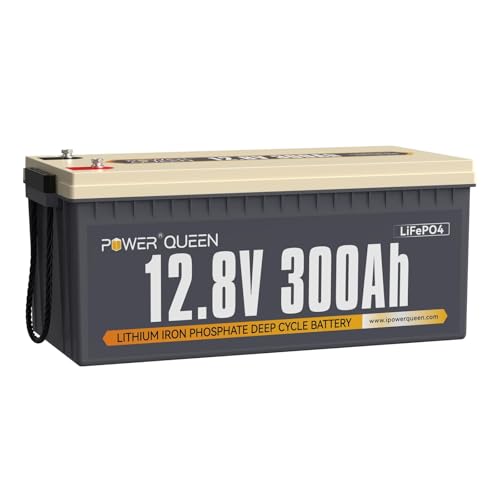
Power Queen delivers a full 3.84 kWh usable energy with a 300Ah capacity. The built-in 200A BMS protects against overcharge, over-discharge, and short circuits, while its 2.56 kW max load power enables running multiple appliances simultaneously. The design emphasizes a higher usable power density versus traditional lead-acid options, and its 12.8V nominal configuration supports flexible off-grid and backup setups. The emphasis is on practical daily use and longevity in demanding environments.
VATRER POWER 12V 300Ah Deep Cycle Battery

VATRER POWER emphasizes longevity with 5000+ cycles and a built-in 200A BMS. The low-temperature cutoff helps prevent charging at unsafe temperatures, while the advanced LiFePO4 chemistry provides higher energy density and stability. The cells are automotive-grade, and the battery supports expansion up to four in series and four in parallel, enabling scalable power for larger off-grid or backup systems. It’s designed to perform in varied climates and conditions with consistent power delivery.
LiTime 12V 300Ah Lithium Battery

LiTime combines EV-grade cells with a UL-certified 200A BMS, focusing on safety and stability. The battery supports expandable capacity up to 40.96 kW through modular configurations, making it suitable for scalable solar homes or off-grid systems. With a 4000-cycle lifespan at 100% DOD and a long 10-year horizon, LiTime is designed for long-term energy resilience. The external form factor favors ease of installation in RVs and small cabins while maintaining robust performance.
Yeagulch 12V 300Ah (314Ah) Battery Set

The Yeagulch 314Ah variant offers up to 4019Wh of energy with a 200A BMS guarding against common electrical faults. It notes extended cycle life and a low self-discharge rate, making it suitable for RVs, marine setups, and solar energy storage. The kit is designed for deeper cycles while maintaining compact size and manageable weight, which can ease weighing and mounting in mobile applications.
Buying Guide: Key Considerations For 300Ah LiFePO4 Batteries
- Capacity versus usable energy: A 300Ah rating may reflect different end-use depths of discharge. Look for specifications like usable energy (kWh) at a chosen DOD, and consider your load profile to select a battery that offers the practical energy you need.
- Cycle life and durability: LiFePO4 batteries typically provide thousands of cycles. Compare cycles at 100% and 60-80% DOD to gauge long-term performance and total cost of ownership.
- BMS protection and safety features: A strong Battery Management System is essential. Prioritize BMS protections against overcharge, over-discharge, over-current, short circuits, and high/low temperature cutoffs. Some models add automatic cell balancing and low-temperature charging protection.
- Temperature tolerance and charging in cold environments: Low-temperature cutoff and heating features can influence charging behavior in winter. If you store or operate in cool climates, this can be a critical factor.
- Physical size and weight: Space on RVs, boats, or cabinets can constrain selection. LiFePO4 generally offers lighter weight than lead-acid, but dimensions and mounting options still matter for installation flexibility.
- Scalability: If you plan to expand capacity, check whether the battery supports in-series and in-parallel configurations. A modular approach lets you scale up safely for larger loads.
- Warranty and certifications: Look for manufacturer warranties and safety certifications (UL, IP ratings, etc.). These signals help verify reliability and compliance with electrical standards.
- Environmental suitability: For outdoor use, pay attention to IP ratings, vibration resistance, and weatherproofing. Outdoor deployments benefit from rugged enclosures and secure mounting.
- Cost of ownership: While not a price tag, assess total cost of ownership considering cycle life, warranty, and any required accessories or balance of system components for larger setups.
When choosing a 300Ah deep cycle battery, align your selection with your primary use: off-grid solar storage, RV camping, marine use, or backup home power. The five options above cover a range of sizes, protections, and scalability features to support different environments. Always verify current specifications and compatibility with your existing power system before purchasing.