For filmmakers, podcasters, and music producers working in small spaces or on the move, 3 inch studio monitors offer a compact, budget-friendly path to honest, near-field listening. This guide highlights five capable options that balance size, sound quality, and build for desktop setups, travel sessions, and dorm rooms. Read on to compare features, compatibility, and what to look for when choosing the right compact monitor pair for your workflow.
| Product | Brand | Key Feature |
|---|---|---|
| KRK GoAux 3 | KRK | Travel-ready with portable sound |
| PreSonus Eris 3.5 | PreSonus | Accurate, expressive near-field sound |
| Mackie CR-X Series CR3-X | Mackie | Flexible inputs, front headphone jack |
| Yamaha HS3 | Yamaha | Classic 3.5″ powered reference |
| PreSonus Eris 3.5BT | PreSonus | Bluetooth-enabled near-field monitoring |
KRK GoAux 3: Portable Studio Monitor Pair

KRK GoAux 3 monitors prioritize portability without sacrificing core monitoring capabilities. The 3 inch woofers deliver a tight, punchy low end suited for near-field listening in small rooms or during quick, on-the-go recording sessions. Their compact footprint fits neatly on a laptop stand or desk, while the overall design supports travel use with a road-friendly build and a soft case for protection. The sound signature remains typical KRK—clear highs, solid mids, and enough bottom presence for reference tasks like vocal editing, guitar tracking, and small-group mixes. The included travel-friendly accessories ensure a ready-to-record workflow wherever you go.
Key considerations include power options and room fit. The GoAux 3 pair works well in compact control areas but may require careful placement away from walls to avoid bass nulls. For engineers prioritizing mobility, these monitors provide a compelling balance of size, durability, and characteristic KRK clarity. Connectivity supports common home and mobile setups, making them a versatile choice for portable studios, rehearsal spaces, and quick mix checks.
PreSonus Eris 3.5 Studio Monitors

PreSonus Eris 3.5 monitors are designed to deliver honest, accurate sound in compact form. The 3.5-inch woofer and a refined high-frequency response create a balanced, articulate mix reference for music production and multimedia listening. They are especially noted for tight bass responses and clean overall clarity, making them suitable for vocal and instrument tracking in small desks. The 50-watt Class AB dual amplification provides ample headroom for desktop use without hogging space or power, supporting longer sessions and more detailed listening without listener fatigue. This pair is well-suited for Home studios, podcast setups, or as a reliable desktop reference in living spaces.
When evaluating these monitors, consider room acoustics, desk height, and listening distance. For users who want a straightforward upgrade from consumer speakers, Eris 3.5 offers a reliable, coherent sound with a relatively neutral tonality. The build quality and branding from PreSonus also translate into solid resale value and consistent performance across sessions and different playback sources.
Mackie CR-X Series CR3-X Monitors
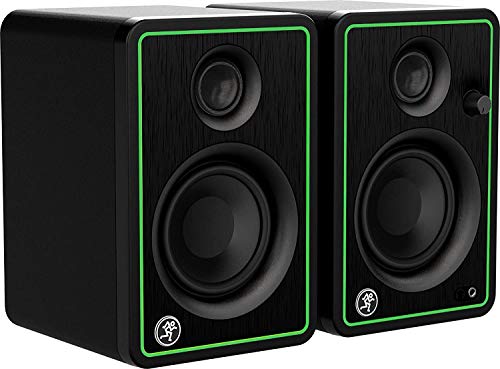
The Mackie CR-X Series CR3-X provides a strong value proposition for compact studios and desktops. The 3.5-inch drivers deliver clear midrange and a surprisingly capable low end for their size, with a front-facing headphone jack that automatically mutes the speaker output for silent monitoring when needed. Flexible inputs—including 1/4 inch, 1/8 inch, and RCA—enable quick connections to a range of audio interfaces, computers, and gaming setups. The overall sound is balanced, often described as neutral with enough presence to reveal misbalances in mixes, which is ideal for small projects, streaming, and multimedia production.
Portability aside, consider the monitoring distance and room treatment. These monitors suit tight spaces and are particularly friendly to beginners and hobbyists who want professional features without a steep price. The front panel controls and ergonomic input options make it easy to dial in a usable listening reference for daily editing and playback tasks.
Yamaha HS3 Powered Studio Monitor Pair

Yamaha HS3 monitors carry a legacy of reference-grade performance in a compact 3.5 inch format. They are known for a precise, controlled sound with a focused high-frequency response and a solid midrange that many engineers rely on for critical listening tasks. The pair covers a 70 Hz to 22 kHz range, which is adequate for near-field mixing, monitoring, and detailed listening in small rooms. The HS3 is particularly suitable for users who want a studio-oriented, straightforward reference for vocal and instrument work, with predictable translation to larger systems when needed.
Placement and room acoustics matter with Yamaha HS3. While the speakers deliver a reliable tonal balance, small rooms can introduce bass buildup or reflections. Consider acoustic treatment, isolation pads, and careful positioning to maximize accuracy. The HS3 remains a strong option for users seeking a classic, repable monitor with a well-known heritage and solid resale value in the studio market.
PreSonus Eris 3.5BT Studio Monitors

PreSonus Eris 3.5BT expands the Eris family with Bluetooth streaming for quick reference checks from mobile devices or laptops. Beyond wireless convenience, the monitors maintain the same honest sound profile and expressive low end that characterize the line. The 50-watt dual amplification delivers clear output without sacrificing tonal balance, enabling comfortable near-field listening for music production, video editing, or multimedia playback. The built-in Bluetooth makes it easy to audition reference tracks quickly, while the controlled low-end response remains suitable for small rooms and desk setups.
For buyers weighing wireless flexibility against dedicated connectivity, these monitors offer a practical compromise. Ensure you manage latency considerations when using Bluetooth for critical editing, and pair with a suitable mobile device or interface to keep audio quality high. They are a practical option for compact studios that value both wired accuracy and wireless convenience.
M-AUDIO BX3 Studio Monitors

The M-AUDIO BX3 offers desktop-grade monitoring with a surprisingly robust 120W total power output, supporting a wide range of creative tasks from gaming to podcasting and music production. The 3.5″ Kevlar woofer and 1″ silk dome tweeter deliver a balanced and articulate sound, while the MDF cabinet and bass reflex design contribute to deep, controlled bass for their size. A dedicated room EQ and high/low tone controls provide quick, user-friendly tuning to match different listening environments, making BX3 a flexible option for multi-use setups and evolving studios.
Consider how you plan to use the monitors: gaming, streaming, or critical mixing. The BX3’s strong feature set—including rear ports and tuning options—gives users the ability to tailor the response. They’re well-suited for environments where space or budget demands a capable yet compact monitor pair for everyday audio tasks and entry-level production work.
Mackie CR3.5 3.5-Inch Monitors with Tone Knob

Mackie CR3.5 stands out with a dedicated tone knob that lets users enhance bass and sparkle highs on demand. This feature makes it a practical choice for gamers and casual listeners who want a bit of tailoring without heavy EQ manipulation. The 3.5-inch drivers provide a balanced, mid-forward sound that translates well to computer audio, video editing, and music production needs. The monitors include TRS and RCA inputs, enabling straightforward connections to most audio interfaces and playback devices, plus a 3.5 mm input for direct PC or laptop use.
From a workflow perspective, the tone control can be a quick way to adjust on-the-fly during gaming or content creation. For critical mixing, users may still want to reference on a more neutral pair, but CR3.5 offers a flexible, inexpensive route into true-studio benchmarking in tight spaces.
Buying Guide: Key Purchase Considerations For 3 Inch Studio Monitors
- Room size and listening distance: Smaller rooms and near-field setups benefit from monitors with a neutral, controlled bass and a clear high end. Place them on isolation pads to reduce desk-induced resonances.
- Driver size versus bass response: 3 inch drivers prioritize midrange clarity and imaging over deep bass. Look for models with solid 50 Hz–100 Hz performance or a tuned cabinet for better low end in near-field use.
- Power and headroom: Class AB or Class D amplification should provide clean, ample volume without distortion at typical mixing distances. Consider built-in EQ or tone controls to tailor the frequency response to your room.
- Connectivity and workflow: USB, TRS, RCA, and Bluetooth (where available) affect how you connect interfaces, computers, and playback devices. front-panel headphone jacks are convenient for quiet monitoring without additional gear.
- Acoustic treatment: While compact monitors are easier to place, room reflections still impact accuracy. Simple treatments like vertical panels and desk isolation can improve imaging and translation to other listening environments.
- Intended use: For critical music production, prioritize accuracy and neutral tonal balance. For multimedia and gaming, a slight tonal boost or tone knob may enhance enjoyment and clarity in dense soundscapes.
- Durability and warranty: Portable monitors should withstand travel and handling. Check for protective housings, solid build quality, and the manufacturer’s warranty.